Recent industrial action has presented considerable challenges to maintaining the efficiency and low costs of the supply chain. There are a number of adverse consequences including, unfortunately, campaigns of disinformation.
Lingering effects of congestion
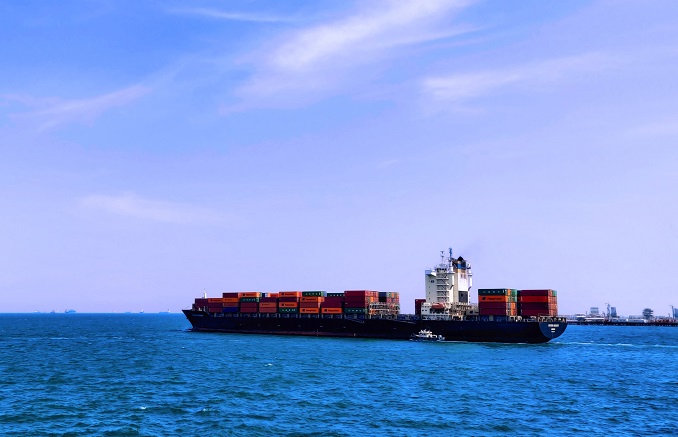
As previously explained, the lingering effects of industrial action has caused extensive congestion for ships coming into Port Botany. Ships and shipping companies have a lot of daily costs that are incurred regardless of whether a ship is actually sailing with cargo. These costs are wasted when there is congestion. There are also all kinds of issues with fuel management, as previously explained.
Ocean shipping companies have many ways to manage these challenges. Some may opt for surcharges. Some may opt to skip a port. Some may decide to change port rotations. Some may decide for some combination of these options. Some may decide not to choose any of these options. In a free and highly competitive market, it is up to each shipping lines to decide how they want to structure their business.
Container shipping is highly competitive
Ocean container carriage to and from Australia is very competitive industry – there are at least 15 container shipping services. And, in recent weeks, there has been reports of a potential new entrant.
Shippers have the free choice to choose the carrier that provides them with the best service and value for money. The business and pricing model for each carrier is unique even when they operate a shared service with other carriers on the same ships in a consortia, they compete with each other. So customers (shippers) don’t have to accept changes to pricing and services on a take it or leave it basis, if their current provider does not meet their requirement for any reason then shippers have the option to choose another carrier.
Feeling empty…
Recent industrial action has also caused a massive backlog of empty containers in Sydney and to a lesser extent in other capital city ports. Ocean shipping companies lose money and revenue-earning opportunities if empty boxes are uselessly hanging about in Australia.
Accordingly, shipping lines do not want their empty boxes here; they want them on on ships and on the way back to Asia to be filled up with more goods.
One way to tackle the backlog is use “sweeper” vessels. These are box ships that have one job: to pick up and take away empty boxes. There’s just one problem: ongoing extreme container disruption in Sydney despite the industrial cease fire, as previously explained.
Shipping companies need additional berth slots at container terminals to bring in a sweeper vessel but with congestion continuing at all terminals, as previously explained there are no additional berth slots available. Currently we are aware that some terminals are providing scheduled vessels with some limited extra time alongside to embark additional empty containers.
But in the current environment, there is no point demanding sweeper vessels call in Sydney. Why? Because it is next to impossible to berth sweepers at Sydney because of congestion. Congestion will have to be worked through before sweepers can call. It’s just as simple as that. On a positive note there are some signs that this may change in the next month at one terminal at least.
Unsubstantiated allegations of double-dipping
Members have advised the Shipping Australia secretariat, and other bodies, that suggestions of shipping lines double-dipping on congestion surcharges (being paid twice – once by stevedores and once by other parties) are simply not true. Fake news.
Containerised ocean shipping is cheap and efficient
Ocean container shipping is the single most efficient way to move large volumes of goods bar none. Back in 1956, loading of a medium sized break-bulk ship cost US$5.83 per US ton. Loading of the first true container ship, the Ideal-X, in 1956 was US$0.16 per US ton. It was literally 36 times cheaper than the alternative. International general cargo freight rates are much lower now than they were 50 years ago.
Container shipping has massively increased its efficiency and value-for-money since then.
According to the World Shipping Council, if all the containers from an 11,000 TEU ship were loaded onto a train, it would need to be 77 kilometres long. A container can be moved from a factory in Malaysia to Los Angeles – a journey of roughly 14,484 kilometres – in just 16 days. The cost of transporting a small electronic appliance from Asia to the US is about US1.50, a kilo of coffee is US$0.15 and a can of beer is a penny.
Shipping industry transparency
International shipping into and out of Australia is transparent. Howls of opportunistic outrage alleging a lack of transparency are unsupported by evidence.
A great deal of liner service-related data can be found on the individual websites of shipping companies and in customer advisory notices. Commonly available data includes liner schedules – and in the current highly congested environment – available information may include matters such as changes in rotation, delays, omissions of ports, schedule updates, surcharges, service phase-outs and blankings of sailings.
If a researcher cannot find a given piece of data on a website, it may have been published in a customer newsletter or even in the trade media. The researcher can always try asking the carrier for it too.
Industry research
Shipping Australia neither collects nor collates detailed operational shipping related matters on a day-to-day basis. Shipping Australia is a trade association founded and operated for the benefit of its members. It is not a charity that carries out unpaid research for the benefit of third parties.
Anyone who needs access to detailed shipping industry information and intelligence is free to pay for it from recognised maritime industry consultants, or to research it for themselves by visiting the websites of shipping lines, signing up to company newsletters or by contacting shipping lines directly.
Talk to your suppliers and customers
Shipping Australia cannot direct nor advise, nor would it direct or advise, any member shipping lines on how to manage its pricing, services or assets. These are all commercially competitive matters that must be decided by the shipping lines. Whether or not shippers accept the commercial offerings of carriers is matter for shippers to consider. That’s the very essence of a free market.
Shipping lines are in the business of satisfying their customers. If you, as a shipper, have an issue with your carrier then you can talk to them directly in an attempt to come to a mutually satisfying agreement. If you cannot come to a mutually satisfying agreement, well, it’s a free market. There are other carriers that you can do business with.
Similarly, land transport operators can talk to their own customers and can come to arrangements about such matters as land transport pricing, surcharges and services to enable them to cope with the challenges caused by the recent industrial action. If they cannot come to a mutually satisfying agreement, well, it’s a free market. There are other customers and suppliers to do business with.
Staying on target: identifying and solving the problem
Issues of congestion, costs and delays have been caused by extensive protected industrial action. The root cause of the recent nationally co-ordinated industrial action is the industrial relations system that allows it to happen. The solution is reform of the industrial relations system.
Simply put, in future, unions must not be allowed to hold the whole of Australia to hostage to their selfish and reckless demands. There ought to be reform so that nationally co-ordinated industrial action across the waterfront cannot occur again.