Shipping Australia is saddened to report that the Maritime Union of Australia has launched a month-long industrial action that could, again, hold Australia hostage again by shutting down the waterfront. This time it is the tug provider, Svitzer, that is being targeted by the MUA.
The key points to remember are that:
- tugs bring ships to and from berths in ports
- if tugs stop then shipping stops
- if shipping stops then Australia is paralysed.
Notified industrial action
The MUA won the right to take out a wide range of industrial action against Svitzer back in August 2020. The MUA has recently notified Svitzer that it will ban:
- overtime, including recall from leave; and
- breaks being taken away from the ordinary Svitzer tug berths, including temporary moorings.
While this may seem like minor industrial action, the impact and consequences can be severe.
Consequences of overtime bans
The overtime ban may have adverse affects on shift changes where crews normally work flexibly. Schedules may need to be adjusted.
International shipping works to very tight windows. If ships are delayed, then shipping and container congestion can build up. That congestion might be invisible but it is there and the disruption can be extensive.
This article and also this article both explain the consequences of delay to importers, exporters and the shipping industry in some detail. In summary: extreme costs and disruption are incurred throughout the supply chain.
Consequences of non-wharf meal breaks
Another apparently-innocuous measure but, potentially, crippling.
Tug crews normally take their meal breaks wherever they happen to be so as to ensure operational continuity. But if the MUA has banned that practice then operational continuity is disrupted.
At some ports in Australia – Western Australia in particular – delay costs one million Australian dollars per hour per berth. If ships aren’t moved in time there are immediate high and escalating costs. Meanwhile, long-duration jobs (i.e. those that require tug crews to be operational for more than five hours at a time) are seriously adversely affected. Or are maybe rendered impossible.
A good example of a long-duration job is the ship-to-ship transfer of crude oil.
What could be affected
Australia is an island nation. An overwhelmingly vast amount of everything – foodstuffs, iron ore, other minerals, goods, furniture, medical equipment and supplies – is carried by sea. There are various providers of statistics, but it is generally considered that about 99 percent of all goods and commodities in and out of Australia travel by sea. Only a tiny portion is carried by air. Read our fact sheet on how Australian trade is handled to find out more.
As will be evident from the fact sheet, if the union really presses its reckless industrial action, then all Australians will be adversely affected, no matter how far they live from the sea. And, given the central importance of freight, the Australian economy could be seriously adversely affected too.
Effects on general household goods and groceries
It is particularly noteworthy that the ports of Brisbane, Botany (Sydney), Melbourne, Adelaide and Fremantle will be affected. These ports are the main import ports for general cargo such as stock sold in retail stores, foodstuffs, household items, medical supplies and other everyday goods that Australian families need to buy on a daily basis.
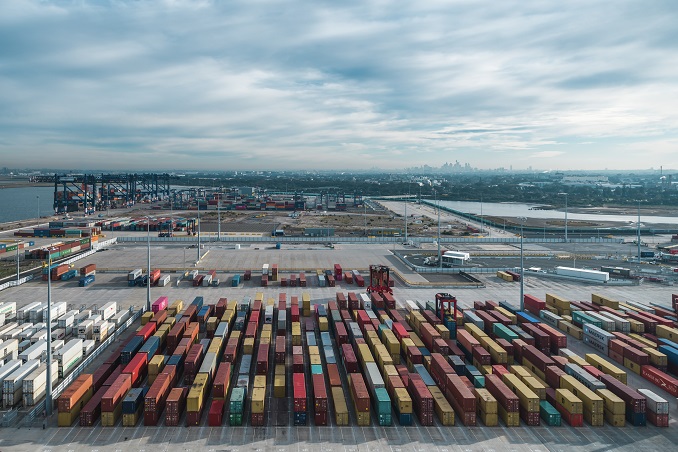
Although estimates vary, Australia imports at least 8.0 million TEU and by some accounts nearly as much as 9.0 million TEU of containers each year. These five ports listed above account for about 95% of all containerised imports into the country.
Effects on imports of crude, petroleum and fuel security
We’ve already noted that long-run ship-to-ship transfers of crude oil could be rendered impossible by the MUA’s industrial action.
Readers who are interested in joining the dots might want to have a look at Figure 8, page 22, of the interim “Liquid Fuel Security Review” by the Department of the Environment and Energy, published in April 2019.
That graphic reveals the main oil product import terminals in Australia. Quite a number of those vitally important fuel import terminals (some of which serve Australian refineries) are affected by the MUA’s action. These include Cairns, Brisbane, Newcastle, Sydney, Melbourne, Geelong and the Perth ports (Kwinana). This list includes the ports at / near our main refineries.
It’s interesting to note that the Maritime Union of Australia has been campaigning on the issue of Australia’s fuel security for some years. But the first organisation to actually pose a threat to Australia’s uninterrupted fuel supply is… the Maritime Union of Australia. Ironic.
What is this industrial action even about?
The MUA will claim that it is seeking to protect worker’s rights. Don’t fall for the claim. Whatever this set of industrial action is about, it has nothing to do with protecting workers from being exploited.
Maritime tug and towage workers have extensive rights under the Fair Work Act, the Marine Towage Award and their extensive enterprise agreements.
Shipping Australia calls for an end to this reckless industrial action. We also call for industrial relations reform so that the waterfront can never again be brought into such serious disruption.
List of affected ports:
Queensland: Cairns, Bowen, Brisbane
NSW: Newcastle, Sydney Harbour, Port Botany (the main container port for Sydney), Port Kembla, Eden
Victoria: Westernport, Melbourne (the main container port for Victoria), Geelong
South Australia: Adelaide, Port Pirie, Whyalla
Western Australia: Albany, Kwinana, Fremantle (the main container port for Perth & Fremantle), Geraldton