The Federal Department of Agriculture Water and the Environment has warned the importing and shipping industries, along with everyone in the sea-container logistics and supply chain, that it is planning urgent action to counter the threat from Khapra Beetle.
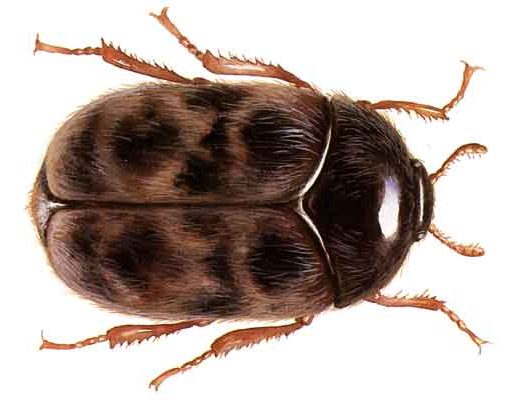
Small beetle; big plant threat
Khapra Beetle is a vigorous and persistent infester and eater of plant product such as rice and grain. It is particularly persistent as, owing to a quirk of its biology, it can lay dormant for literally years before emerging to infest and destroy plant-products. Unfortunately, the risk appears to be increasing as Khapra Beetle is spreading around the world.
Small beetle; big cost
The Department argues that if Khapra Beetle were to enter Australia there would be significant economic costs to Australia of approximately A$15.5billion over 15 years from damaged grain in storage and exports. The DAWE is planning to create revised measures for shipping containers that are expected to begin in early 2021. What those measures will be has not been publicly released, although information from the DAWE suggests that “a range of measures are being considered”, including possible treatment options.
Shipping Australia has opposed consideration of treatments of all full containers and empty boxes that would cause global container congestion and impose massive additional costs on all container movements. The focus should be on treating all high risk cargoes to ensure that containers do not become infested.
Disrupted trade; also a big cost
Any proposed measures must be carefully thought through and must especially consider the impact on global and Australian trade. According to shipping industry documents, in 2018, international container traffic amounted to 219 million loaded TEUs – approximately 131 million packed containers. There were 144 million empty TEUs – approximately 86 million empty containers. Assuming some kind of measure is imposed that costs US$100 per container, that would cause an increase in annual costs of about US$20 billion A YEAR.
Acceptance of proportionate control measures
As an industry submission to the International Maritime Organization reads, “the shipping industry accepts that under certain circumstances, and based on a proper risk analysis and assessment, specific pest risks may warrant the implementation of focused programmes and requirements”. The classic example in Australia is the risk-based pest control programme for insects such as the Brown Marmorated Stink Bug, which has been developed in consultation with stakeholders.
Convention for Safe Containers
Australia is a signatory to the IMO’s 1972 Convention for Safe Containers (CSC 1972) which is incorporated into Australian law by AMSA’s Marine Order 44 (Safe Containers).
Among other things, the Convention/Order requires the maintenance and inspection of containers. There are two approved inspection schemes. The first is the “Periodic Scheme” which requires a box to be examined on its 5th anniversary of manufacture and thereafter at intervals not exceeding 30 months.
There is also an “Approved Continuous Examination Program” which enables the appropriate authorities to approve a continues examination scheme if there is satisfaction that the boxes are properly and regularly inspected as part of their normal operations.
Apply the Safe Container Convention
If an incursion of pests is detected, then it is sensible to apply temporary and heightened measures appropriate to that particular incursion. But it is not appropriate to apply those heightened measures on a permanent and continued basis.
If a container must be taken out of service for a pest-inspection, then it is sensible and appropriate that the box is inspected for pests as part of the existing safety-inspection regime. That’s just an efficient and less-disruptive way to ensure boxes are inspected.
By way of analogy, consider requirements for the inspection of a vehicle. If the mechanical parts of a car have to be inspected for safety, then it just makes sense to carry out a safety inspection of the electrical and hydraulic components of the vehicle at the same time. No-one would seriously argue that the vehicle should be checked in week one for mechanical issues, in week 12 for electrical issues and again in week 24 for hydraulic issues.
“Given a container travels through various international ports and related regulatory regimes, any new inspection should utilise that existing internationally recognised framework”, said Deputy CEO Melwyn Noronha.
Further reading:
Khapra Beetle: Department of Ag imposes drastic measures on trade