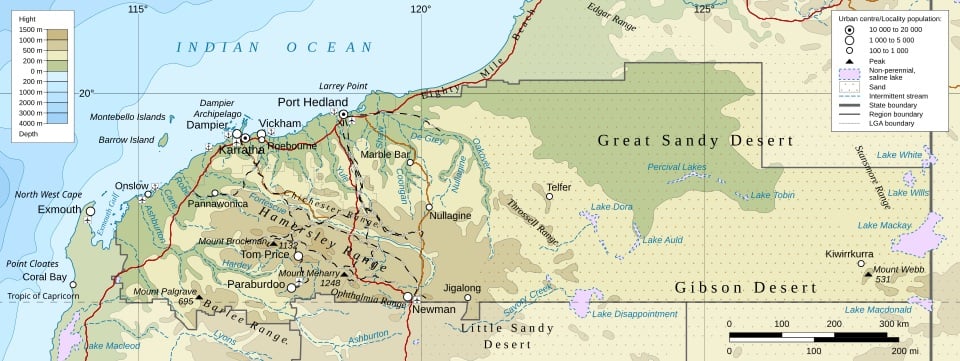
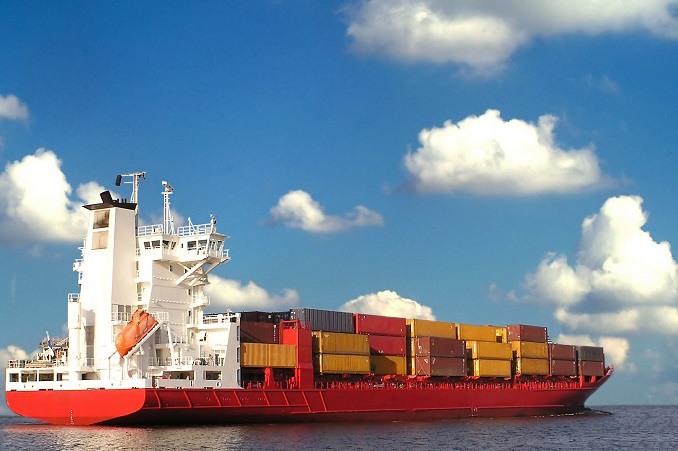
The government of Western Australia is establishing a taskforce into shipping and the supply chain. It will be led by the Parliamentary Secretary to the Minister for Transport and Ports Jessica Stojkovski MLA, and the Hon. Kyle McGinn MLC, reporting back in late March 2022.
The taskforce will examine the state’s shipping industry and supply chains that link Western Australia with the east coast and international customers. It has been set up in response to the supply chain disruption caused when the east-west rail link was closed by floods.
The taskforce will look at the roles that intrastate and interstate shipping can play as an ancillary route for the movement of freight in the event of natural disasters and disruptions.
It is good to see that politicians understand that ocean-going shipping is a mode of transport that boosts supply chain resilience. The resilience of seaborne transport has been proven in theory by the Productivity Commission’s Supply Chain inquiry (and also numerous times by UN bodies).
And, given that ships delivered the goods when there was damage to Australia’s cross-country land infrastructure, the resilience of seaborne transport has also been proven in fact.
However, Shipping Australia would advise against any further restrictions on coastal trading under the guise of building supply chain resilience.
The existing coastal regime was promoted by a certain maritime policy actor as being sure to spark a shipping Renaissance.
But it didn’t.
The same policy actor said that the coastal regime (and associated tax benefits) would provide Australian companies with an exciting opportunity to invest in new tonnage and to expand existing operations.
But it never.
The same policy actor said on the “great day” of the legislative passage of the coastal shipping and tax regime, that shipowners were ready to invest, that they were committed to their investment decisions, and that they were looking forward into expanding into new trades.
But they weren’t. And they didn’t.
Worse, the 2012 coastal regime not only failed to revitalise the Australian shipping industry, it harmed Australian shipping, it harmed Australian seafaring employment (many seafarers lost their jobs), and it harmed Australian shippers who have had to pay inflated freight rates (and, in some cases, have gone out of business because of it).
Different independent experts have called for the existing coastal shipping regime to be scrapped, again and again and again and again and again and again and again (seriously, there have been a lot of calls to scrap the coastal shipping regime).
Meanwhile, we would also advise against a national fleet which is an extraordinarily bad idea.
Firstly, the policy actors who were incredibly enthusiastic about – and were completely wrong about the effects of – the current coastal and shipping tax regime are cheerleading the idea of a national fleet. If there was demand for an Australian national fleet then, surely, the Australian coastal trading regime that was set up to revitalise local shipping would have induced its creation?
But it didn’t.
Secondly, we’ve been here before. Australia formerly had a nationally owned fleet of about 40 ships. The company that ran that fleet went bankrupt. It was re-capitalised… and… went bankrupt again. Re-capitalised once more, it then bled money. Eventually, it was restructured.
When a Labor Federal Government decided to dispose of the fleet, the then Minister for Transport, Laurence Brereton, famously lamented, “you couldn’t give it away, that’s the reality”. The national fleet was eventually sold.
All the reasons why the national fleet failed: competition, high operating costs under the Australian flag, and government interference in commercial decision-making, still exist today. It seems likely that a national-fleet would be ill-advised. We note that there are calls for government to create and subsidise a national fleet.
But it shouldn’t.
Shipping Australia would instead advise government that the section 11 exemption to the Coastal Trading Act be indefinitely extended or rolled-over so that the latent spare capacity of ocean-going ships – which are sailing from east to west Australia – can be used by shippers at a fraction of the cost of an unnecessary and expensive domestically-protected coastal or national fleet.