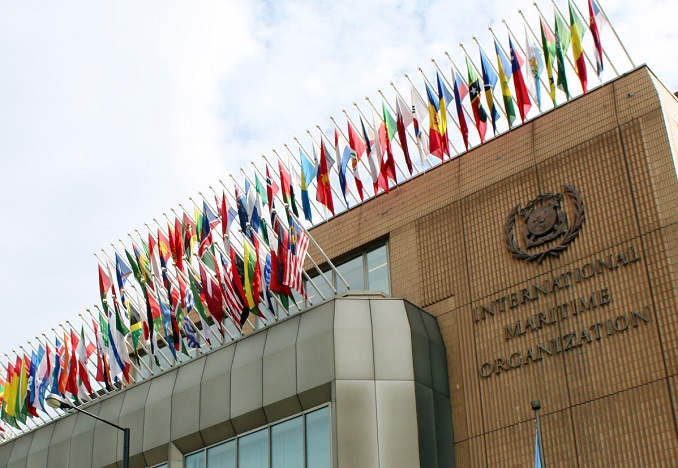
A wide range of matters are on the agenda of the IMO’s Maritime Safety Committee, the most important maritime safety meeting on the planet, which will be held in a few weeks in early November.
Top of the agenda are the standards for the carriage of industrial personnel at sea, which is becoming increasingly important as the offshore energy sector continues to develop. The new code will, if adopted (as is expected) will apply to vessels carrying more than 12 personnnel.
Ship safety will be tackled in the wake of the tragedy of the Stellar Daisy, a very large ore carrier that was lost with the deaths of 22 crew. The MSC is expected to amend the Code of Inspections on bulkers and oil tankers (2011 ESP Code). There will likely be increased survey requirements for water ballast tanks and void spaces. The Stellar Daisy was lost off the coast of South America because of the effects of bad weather on a ship structure compromised by material fatigue, corrosion, unidentified defects and multi-port loading. The failure probably began in a port water ballast tank, investigators concluded.
Life saving appliances will be address with revised recommendations on testing life-saving appliances for liferafts and lifeboats. The draft regulations will be aimed at ensuring that survival craft have sufficient fresh air to prevent a concentration of more than 5,000 parts per million of carbon dioxide. Exposure to too much CO2 can cause headaches, dizziness, nausea and potentially even asphyxiation (suffocation) as C02 replaces oxygen in the blood.
Onboard lifting appliances (winches and the like) will, if amendments to SOLAS are passed, to be designed, constructed and installed in accordance with Class Society rules.
New draft amendments are likely to be approved requiring the mandatory carriage of electronic inclinometers, linked to voyage data recorders, on box ships and dry bulkers of 3,000 gross tons and up built from January 2026.
The MSC is one of the major committees through which much of the work of the IMO is carried out. The MSC tackles all matters relating to maritime safety and security including updating the Safety of Life at Sea Convention, dangerous goods, life-saving appliances, fire safety, training and certification of seafarers, piracy, cyber security and more. A voyage data recorder is like the “black box” on an aircraft and it enables accident investigators to review procedures and instructions in the moments before an accident. An electronic inclinometer is an instrument for the measurement of angles of slope and inclination of an object. In the marine context, it will measure how much a vessel is tilting. A ship can capsize if it tilts too much.
Also on the agenda is fire-fighting. November’s MSC is expected to ban foams containing perfluorooctane sulfonic acid because it is toxic. Other fire-fighting work includes a draft circular on ensuring the capabilities of fixed dry chemical power fire-extinguishing systems; the use of sodium bicarbonate will not be prohibited.
November’s MSC will also tackle COVID-delayed business including goal-based new ship construction standards and formal safety assessments.
The IMO is a specialist United Nations organisation that regulates the global maritime sector. Membership of IMO is limited to countries that accept the IMO Convention and pay the applicable fees (based on tonnage in the merchant fleet).
There are about 175 countries that are IMO members (about 195 countries exist), there are about 66 inter-governmental organisations (e.g., the Indian Ocean Commission) that have observer status, and 85 non-governmental organizations with consultative status (e.g., the World Shipping Council).
The main Assembly meets every two years and, in-between, a council of 40 nations acts as a governing body. The technical work of the IMO is carried out by a series of committees and sub-committees which are attended by government delegates from around the world. The IMO Secretariat consists of about 300 international civil servants and the Secretary General.