AET, a Malaysian tanker operator has announced that it has entered into two time charters with PETCO Trading, a wholly owned subsidiary of PETRONAS, the Malaysian state energy company, for two ammonia-powered dual-fuel Aframaxes. An “aframax” is an oil tanker with a deadweight between 80,000 and 120,000 tonnes.
AET also signed shipbuilding contracts with Dalian Shipbuilding Company, a subsidiary of the China State Shipbuilding Corporation.
Commenting in the development, Capt Rajalingam Subramaniam, President and Group CEO of MISC said: “signing of the Time Charter Party Contracts and the Shipbuilding Contracts is a clear testament of turning ambition into action. These partnerships seamlessly align with our collective vision of driving meaningful and purposeful change globally as we progress towards a net-zero future. With the signing of these contracts, we’re not only advancing sustainable practices but accelerating our journey towards the MISC Group’s 2030 aspirations.“
About AET and MISC
AET generates in excess of USD$1 billion a year in revenues, and operates 66 vessels, of which 13 are Very Large Crude Carriers, six suezmaxes, 20 aframaxes (including four dual-fuel ships), 17 dynamic positioning ships, two long range type-2 tankers, two chemical tankers and nine miscellaneous vessels. AET is a subsidiary of Malaysian energy tanker major MISC, which is listed on the Malaysia Exchange. MISC has a market capitalisation in excess of USD$7.6 billion and operates a fleet of over 107 tankers and 12 floating / production / storage ships. In the 2023 calendar year, MISC generated group revenue of 4,278.3 million Malaysian Ringgit (approx USD$895 million).
Ammonia could help decarbonise
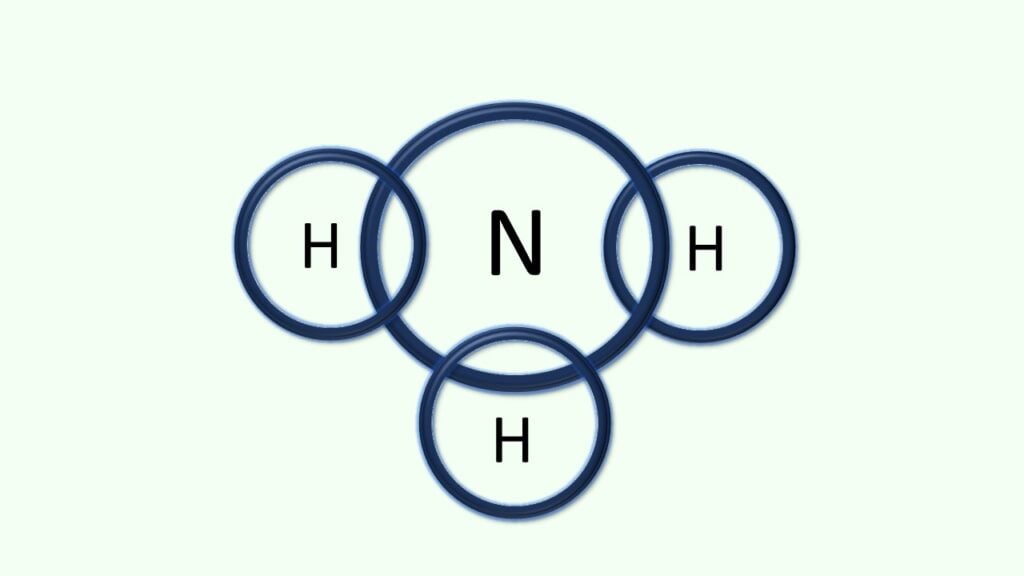
Currently, shipping produces about 3% of the world’s carbon dioxide emissions each year, which is equivalent to the yearly emissions of Germany. Ammonia could be used as fuel because it has an energy density of about 22.5 megajoules per kilogram and a volumetric density of about 12.7 megajoules per litre (the former is energy density by mass, the latter is energy density by volume). Ammonia is considered to be a candidate fuel that could help the shipping industry meet the International Maritime Organization’s goal of net-zero carbon emissions by 2050 because it produces no carbon gases during combustion because as is composed of one atom of nitrogen and three atoms of hydrogen.
Ammonia is currently largely made using fossil fuels, however, it could be made using renewable energy from, say, solar power or offshore wind. Electricity is used to split water, releasing hydrogen and oxygen. Air (as in the air you breathe) is about 78% nitrogen and 21% oxygen, along with some trace gases. Air can be purified (to remove trace gases, water, dust), super-cooled to liquid and then warmed. As the liquid nitrogen and liquid oxygen re-gasify at different temperatures, they can be separated and collected. If this is all done with green energy, and if nitrogen and hydrogen are re-combined in the appropriate ratios, then the resulting ammonia is said to be “green” i.e. environmentally friendly.
Disputable claims and safety concerns
However, any claims that ammonia as a fuel has green-status is somewhat disputable. Nitrous Oxide (N2O), one of the products of ammonia combustion, has 273 times greater global warming potential than carbon dioxide. That said, greenhouse gas emission intensity (measured in gCO2e/kWh-GWP100) is approximately 75 whereas Very Low Sulfur Fuel Oil is over 600*. Nitrous oxides in the atmosphere also lead to smog, contribute to acid rain (which damages ecosystem health, and farming), and causes various respiratory illnesses in humans.
Although ammonia is a naturally-occurring compound, and everyone is exposed to some level of ammonia every day (the human body actually makes it), ammonia is known to be a reactive, caustic and extremely toxic compound, even at relatively low levels. Ammonia can enter the body through direct absorption by bodily tissues (e.g. the skin) or through inhalation as a gas. Small drops of liquid ammonia will cause burns and open sores, exposure to high levels of ammonia will result in severe chemical burns on all exposed tissues and it can cause permanent blindness, lung disease, or death. Such exposure could occur, for example, though being exposed to a cloud of ammonia gas. Ammonia can form a gas cloud if it enters into contact with moisture or water.
Class society (a marine technical regulator and engineering consultancy) and Total Energies (an energy major) carried out an assessment as part of a process to help develop ammonia as a marine fuel. They began by assessing “what concentrations of ammonia in the air would be problematic, and compared those levels to LNG. An LNG-fueled tanker served as the model for the comparison, showing a stark contrast between the two fuels. LNG becomes dangerous at around 50,000 parts per million (ppm), while ammonia starts to have health effects above 30 ppm when permanently exposed, or around 300 ppm when exposed for one hour”.
Ammonia clouds; ammonia risk
Researchers at Aarhus University, Denmark, have written: “Liquid anhydrous ammonia (LNH3) is highly soluble in water and when released into the environment, it will also evaporate and react with water in the air. It will form a white cloud that will drift with the wind and spread highly toxic gasses. It will poison the organisms that it passes, and subsequently some of the ammonia will be deposited on vegetation, soil and water. Ammonia is highly toxic and exposure to elevated concentrations can be fatal to humans, animals and plants… an accident will have some acute lethal effects where local population sizes may be reduced”.
They add that a large accident, with ammonia releases in the same order of magnitude as the spill scenarios they modelled, is estimated to happen once in every 10,000 years for a modern ammonia factory. This is, of course, just one assessment of likelihood of release. Maritime researchers in Singapore noted that the UK health and safety regulator assumed a total of 3.1 ammonia releases for every 100,000 movements of ammonia carriers. However, as the Singaporean researchers then noted, “when ammonia is used as a marine fuel, much more ammonia will be transported by sea. The heightened activities related to ammonia loading and bunkering operations pose an increased risk of ammonia release. This heightened risk has significant implications for port operations, particularly for bunkering ports. For instance, there were 100,807 vessel arrivals at the port of Singapore in 2022 [44]. If all these vessels conduct ammonia bunkering operations or carry ammonia as cargo/bunker in Singapore, it may result in three cases of ammonia release annually”.
In a 1997-reported event, cattle were exposed to ammonia when a pipeline running through the pasture ruptured. The ammonia contacted moisture and formed a white cloud that drifted across the cattle. Four were found dead, and two others had to be put down because of blindness and respiratory distress. On 23 August 2010, at the Millard Refrigerated Services facility in Theodore, Alabama, United States, a failure led to the release of more than 32,000 lbs (more than 14,514 kgs) of anhydrous ammonia; a resulting ammonia cloud travelled 0.25 miles across the river. Downwind of the plant there were several workers who were exposed; 32 people required hospitalisation and four were went to intensive care.
Researchers in Singapore noted at least 16 fatalities in the United states over two decades because of the rupture of tanks. Meanwhile, China has seen 82 ammonia-refrigeration accidents between 2010 and 2020 resulting in 189 fatalities and 1,081 injuries, all caused by pipeline ruptures. Fishing vessels are the primary location for ammonia release over water, as they use ammonia for refrigeration, leading to personnel fatalities and damage to the vessel’s hull and machinery.
How dangerous any given ammonia spill will be will depend on a range of factors including storage pressure, temperature, flow rate and how big the spill is, and what the local weather – particularly wind speed – is like at the time.
Industry position
There is a non-regulatory industry safety body, “Together in Safety,” that was set up with the principal objective of protecting seafarer lives. It comprises industry groups including the International Chamber of Shipping, BIMCO, OCIMF, Intertanko, Intercargo, Interferry, Cruise Liners International, World Shipping Council, in addition to major shipping companies, Classification Societies, P&I insurance, and country representatives. The group produced a report, “Future Fuels Risk Assessment,” based on a series of hazard identification workshops with representatives from a variety of large shipping companies. They assessed Liquefied Natural Gas, Methanol, Ammonia, and Hydrogen. They assessed risk on two axes – likelihood (ranging from remote to extremely likely) and consequences (minor injury to many fatalities) over just under 70 different points of failure. The non-ammonia fuels were generally assessed as having risks that were either “broadly acceptable,” or “tolerable risk – as low as is reasonably practicable”.
Ammonia, however, was rated as having “intolerable” risk.
“Out of the fuels reviewed, methanol poses the least risk… A number of risks for ammonia as a fuel are classified as High (Intolerable)”.
Seafarer acceptance
There are clearly many issues with ammonia toxicity. There appears to be be an issue of a lack of seafarer acceptance. Several seafarers have expressed views that they will simply not sail on ammonia-powered vessels. One STCW III-certified marine engineer wrote, in relation to an article in the trade media on ammonia as a fuel: “why should any seafarer’s family have to welcome them home in a wooden box?”. Another chief engineer wrote “ammonia as fuel – sure as hell will not be sailing those ladies”.
Another seafarer, a master mariner, wrote: “[it’s] an open invitation to mass casualty events”.
Further reading:
“World’s first ammonia dual-fuel aframaxes to be developed by AET – MISC’s petroleum arm” 19 April, AET
“Ammonia as an alternative fuel gathers pace, safety concerns remain” – M Hand, 23 April 2024, Seatrade
“Ammonia toxicity” , R P Padappyil, J Borger, 11 March 2023, US National Library of Medicine
“Toxicological profile for ammonia,” US Department of Health and Human Services, Public Health Service, Agency for Toxic Substances and Disease Registry
“Assessment of the potential environmental impacts of a major ammonia spill from a power-to-X plant and from shipping of ammonia in Greenland,” Danish Centre for Environment and Energy, No. 487 of 2022; Aarhus University.
“Risk assessment of ammonia bunkering operations: perspectives on different release scales“, M Yang, J SL Lam, Journal of Hazardous Materials, Volume 468, 15 April 2024 – doi.org/10.1016/j.jhazmat.2024.133757
“Bureau Veritas completes new study on ammonia as fuel,” 27 June 2022, Bureau Veritas
“Ammonia as a Marine fuel version 2.0” Society for Gas as a Marine Fuel, March 2024
* See – “Ammonia as a marine fuel and introduction v 2.0 Environmental comparison of fuels, Figure 7: Typical Well-to-Wake emissions of marine fuels (gCO2e / kWh – GWP 100) (Source: Bureau Veritas) by the Society of Gas as a Marine Fuel).