The weather system known as “El Niño”, led to lower water levels in the Panama Canal, an international group of weather-scientists has concluded in a new paper.
In their study, “Low water levels in Panama Canal due to increasing demand exacerbated by El Niño event,” by C Barnes of the Imperial College, London, et al, the scientists concluded that low rainfall during the 2023 rainy season (May-December) contributed to “extremely low water levels in Lake Gatun”, despite an above-average water level at the beginning the year.
The scientists observed that, although there is some evidence of a drying trend, there was neither climate model data nor a strong physical argument to support a hypothesis that there is drying in the Panama Canal watershed area that is driven by human-induced climate change. Further research is needed to understand the mechanisms driving reduced rainfall in this region and whether they are linked to global warming.
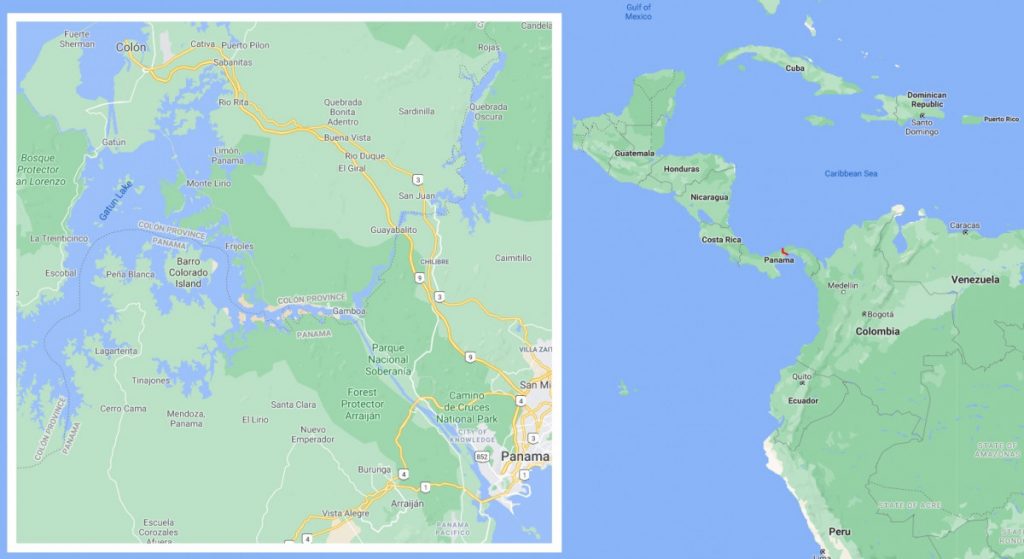
One of the driest years on record was experienced by the Republic of Panama in 2023 with rainfall in the Panama Canal Watershed – the source of 100% of the water used by the Panama Canal – below average for all but one of the eight months that make up Panama’s rainy season.
The researchers noted that rain in Panama is “strongly influenced: by the El Niño Southern Oscillation (ENSO) system. It is a complex system driven by the trade winds, sea surface temperatures, and an upwelling of cool water from the deep ocean. The system is generally said to have two main phases – a “La Niña” phase, which tends to lead to storms and heavy rain, and an “El Niño” phase, which is dryer.
It was found by the researchers that urban expansion, population growth, and aging infrastructure that loses “significant” amounts of water through leaks, are increasing pressures on water supplies. Gatun Lake – a key part of the shipping route – supplies water to the Panama Canal and it also provides drinking water to about 2.25 million people. The researchers noted that the Panama Canal Watershed supplied about 55% of Panama’s total population need and 95% of the safe drinking water for several of the Panama’s largest population centres. The Pacific slope of the country is inhabited by 83% of the country’s population – including Panama City, San Miguelto, La Chorrera, Arrijan and Capira. Population in the region is forecast to increase by 12.5% to 4.6 million in 2050, “putting greater pressure on Panama Canal’s municipal water demand if resilience is not improved”.
“Projections show water demand will increase more than double by 2050 compared to 2015 levels, potentially putting a strain on water security (ibid). At the same time, roughly 42% of the potable water produced is lost, due mostly to leaks, which suggests infrastructural opportunities for improvements in the water distribution system,” the researchers said.
“Urban expansion and unsustainable agriculture exacerbate land degradation in the Panama Canal Watershed, and the increased population strains natural resources, especially drinking water, heightening the impact of low rainfall in the region. While initiatives exist to increase the efficiency of water usage through the ACP’s work with farmers on combating inefficient irrigation use, for example, there is an opportunity to do more to increase efficiency, especially as roughly 42% of the potable water produced is lost in the water distribution system,” the researchers concluded.
Global shipping has been affected by the low water levels, with the Panama Canal Authority announcing that the number of transit slots for the Canal would eventually be reduced to about 18 slots per day. Transits were actually reduced down to 24 slots per day, leading to queues and delay and, potentially, up to 4,000 fewer Panama Canal crossings according to McKinsey & Company.
However, the Panama Canal Authorities now expect to see normalisation by 2025.