A dry bulker has been sunk by the Houthis in the Red Sea after they attacked it first with a bomb in a remotely operated small vessel and later by some kind of airborne projectile. A mariner is missing, and is now presumed dead.
Vessel abandoned, then sinks
Following the attack, the master of the Tutor (IMO 9942627) reported to the UK Maritime Trade Operations centre that the vessel was taking on water and was not under command of the crew. The master later reported that the vessel was hit for a second time by an unknown airborne projectile. The crew of the ship were evacuated by military authorities and the vessel was abandoned. Owing to the remoteness of the region and the fact that is now a conflict zone, there is no substantial salvage ability in the vicinity. The vessel was later reported to be drifting and, ultimately, only maritime debris and oil were sighted in the last known location in the southern aspects of the Red Sea. The vessel is now believed to have been sunk.
The Tutor, a 2022 built; Liberia-flagged; Greek owned and operated dry bulker of just over 82,000 deadweight tonnes and a length overall of 229 metres and a beam of 32 metres is said to have been en-route to India, according to unconfirmed media reports. The last known port of call of the vessel appears to have been Aqaba in Jordan, according to several different AIS-based ship tracking websites.
How the attack unfolded
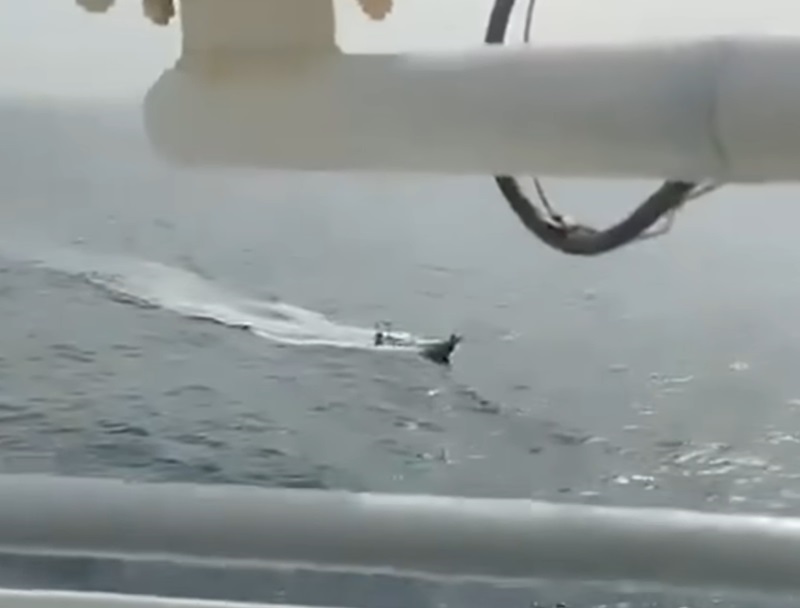
The waterborne bomb that hit the ship took the form of a light-coloured, 5m to 7m boat, that apparently had one or two personnel in it; however, these were later understood to be dummies. The weaponised boat hit the dry bulker, Tutor on 12 June 2024 at the waterline on the port side under the wing bridge near the engine room. The engine room was flooded and a mariner working in that area of the ship is now presumed dead. Visual images said to be of the attack shows the armed security team (although at least one of the team did not have a magazine of ammunition installed on his rifle) and at least some of the crew on the wing bridge watching – but taking no action – as the watercraft approaches the vessel then veers in toward the port side; the team and the visible crew then run inside the accommodation block. The actions of the security team have been extensively criticised.
Criticism and analysis: lack of action by the security team was “unacceptable”
An executive from the private military security company Neptune wrote: “the security team onboard[‘s]s reaction which in my opinion was very poor (they stood around doing nothing with no magazines on their rifles) and highlights that the PMSC in question either had not issued their teams with clear [standard operating procedures] on how to react in the event of a [waterborne improvised explosive device] incident or the team did not understand them, either way this is unacceptable”.
However, the executive did note that the “Best Management Practice Guideline 5 To Deter Piracy And Enhance Maritime Security in the Red Sea, Gulf Of Aden, Indian Ocean and Arabian Sea” advised armed guards not to engage a waterborne improvised explosive device, apparently on the grounds that the response window is small, the vulnerability points on the device would be difficult to hit and the likelihood of success is limited. Neptune comment that, in the event of such an attack, crew ought to be mustered and moved to a safer place and, if the craft is identified as a device, then the team should engage with live firing either in an attempt to disable the engines or to detonate the craft taking into account safe distances.
A somewhat similar comment was made by maritime risk management company, Ambrey, which argued that the size of the armed team aboard ought to be increased and equipped with the ability to destroy waterborne explosive devices and vessels. “Vessels assessed to be at high risk are advised to re-consider their voyage, which could include re-routing,” Ambrey added.
Anatomy of a waterborne improvised explosive device
According to maritime risk management company, Ambrey, in January this year, a remote controlled waterborne explosive device washed up in the Bab Al Mandeb – the strait between the Horn of Africa and the south western part of the Arabian peninsula. The Bab Al Mandeb is about 21km wide at its most narrow point. The vessel was assessed and the U.S. Central Command for the region reported that the boat had three pressure contact electronic switches, one each forward / starboard / port, which were rigged to 25 kg of C4 explosives and 50kg of TNT. The washed up boat was a fishing-type boat and also contained dummies.
“The use of dummies was significant. This modus operandi has been seen before. This can disguise the nature of the threat and can draw defensive fire toward the ‘operator’. In previous incidents, a second skiff has been seen within 2NM. From this second skiff, the operators have radio-controlled the unmanned devices. At the time of writing, no second skiff had been reported. The Houthis have the proven capability to track these modified vessels using GPS and to utilise a video feed. It is assessed possible that this was controlled remotely from land,” Ambrey noted.
Attack on the Verbena
On the day following the attack, i.e. on 13 June 2024, a second vessel was attacked this time with two anti-ship cruise missiles while transiting the Gulf of Aden. The missiles hit the 2008-built Verbena (IMO 9522075), a Palau-flagged general cargo ship of 139 m length overall, a beam of 19m, and two cranes. U.S. Central Command reports that the vessel is Ukrainian owned, Polish operated, and was ex-Malaysia bound for Italy with a cargo of wood construction material. The Verbena was damaged and set on fire. One mariner was “severely injured” during the attack, U.S. Central Command reports, adding that the injured mariner was evacuated to an unspecified military ship for medical attention.
Harder to deliver aid
U.S. Central Command has reported that, over the last few weeks, it has destroyed numerous Houthi maritime and land assets including patrol boats, air defense sensors, unmanned aerial vessels, unmanned surface vessels, anti-ship cruise missile systems, anti-ship ballistic missile systems, and more, on the grounds that such assets present an imminent threat to merchant vessels in the region and actions are taken to protect freedom of navigation in the region. Several other vessels have also been attacked in recent days, U.S. Centcom has reported.
“The Houthis claim to be acting on behalf of Palestinians in Gaza and yet they are targeting and threatening the lives of third country nationals who have nothing to do with the conflict in Gaza. The ongoing threat to the ability to safely transit the region caused by the Houthis makes it harder to deliver critical assistance to the people of Yemen as well as to Gaza,” U.S. Centcom reported.