Global shipping’s top maritime cities have been revealed in “Leading Maritime Cities 2026,” a joint publication by international shipping advisory firm and class society DNV, and Menon Economics.
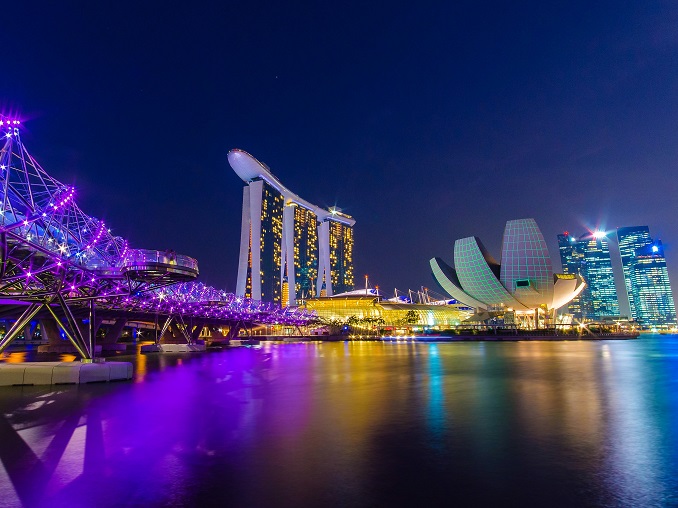
Top of the list to no-one’s surprise is Singapore, which ranked first in the categories of Shipping, Ports and Logistics, Attractiveness and Competitiveness, while placing third in Maritime Finance and Law, and fourth in Maritime Technology. “The city combines large managed and owner-controlled fleets with a globally important port, strong liner connectivity, alternative bunkering capability and a wide range of maritime services. Experts also rank Singapore first as a shipping hub, technology hub, digitalised port, multi-fuel port and preferred location for maritime headquarters and research and development. Its leadership therefore does not depend on one activity,” the report said.
In second place is Shanghai, reflecting its strength in Maritime Technology, Ports and Logistics, and Shipping. “The city combines the world’s largest container throughput and strongest liner connectivity with significant shipbuilding output, the highest number of maritime patents, and not least, a large and valuable fleet of ships,” the report said.
London is the third-ranked city, which earned its place through a “very different model,” DNV said. It ranks first in Maritime Finance and Law, and third in Maritime Technology. The city is regarded as the leading location for maritime legal expertise, dispute resolution, marine insurance, and maritime finance. It also performs strongly in classification, research, maritime technology start-ups, university programmes, and human capital. “London’s results demonstrate that a leading maritime city does not need to control the largest fleet or port. Its influence comes from the concentration of knowledge, capital, professional services and decision making used by companies operating across the global maritime industry,” the report said.
Rounding out the top five were Rotterdam for its diversified maritime profile, and Tokyo, which was recognised for its broad base of established maritime and industrial capabilities.
More than 15,000 cities were assessed for DNV’s Leading Maritime Cities 2026, and were then narrowed down to 50 for a detailed assessment, using 48 objective and subjective indicators, incorporating responses from more than 200 maritime experts globally.
No Australian city made the top 30 of the list, no, not even after the implementation of the Coastal Trading (Revitalising Australian Shipping) Act 2012 and the creation of the Strategic Fleet.
So sad.