A final concept design has been unveiled for the Port of Newcastle’s Clean Energy Precinct, which will produce over 600,000 tonnes of green ammonia, and also hydrogen.
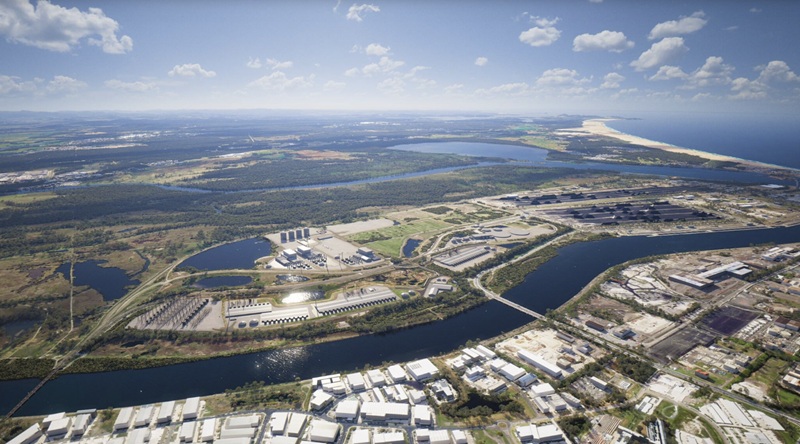
The precinct will be built on a 220-hectare parcel of land on Kooragang Island, that was formerly the site of a steelworks.
The site is on the side of the southern channel of the Hunter River and is immediately adjacent to the west of the existing coal-reclaiming yards; it is also to the north on the side of the river opposite the Mayfield West industrial area of Newcastle.
Port of Newcastle is seeking to develop the area as part of its diversification programme and the goal is to generate over 50% of its revenue from non-coal sources by 2030. Both the Clean Energy Precinct, and the container terminal concept, are part of that diversification programme.
Currently, the port is thought to be the world’s largest coal export port and Australia’s largest east coast port by volume exported. Newcastle handles about 152 million tonnes per year and the main bulk cargoes are coal (144.49 million tonnes), meal / grain exports (163,841 tonnes) and fertiliser imports (163,841 tonnes). The port handles around 25 different types of cargo over a 777 hectare site and it handles 4,426 ship movements a year.
Construction of the Clean Energy Project is anticipated to start in 2027 and take around two years to complete. It’s expected the project will be operational in late 2029-2030.The new Clean Energy Precinct is forecast by the port to add 5,800 new jobs into the region and over AUD$4 billion in gross regional product by 2040. Ancillary and civil works will include site buildings, offices, internal roads, car parking, warehousing, laydown area, storage yards, clean energy storage facility, staging areas, associated pipeline infrastructure, hydrogen production, ammonia production; electrical works – grid connection, transmission infrastructure, substation, and switchyard.
It is hoped that the site will enable the production, storage, distribution and export of clean energy products including green hydrogen and ammonia, and will integrate clean energy production and storage with the Hunter’s Hydrogen Hub gateway projects, the New South Wales Renewable Energy Zones, and offshore wind developments. The project will deploy a 50 MW electrolyser, powered by renewable energy, producing around 4,700 tonnes of green hydrogen each year. The facility will enable the production of more than 600,000 KTPA of green ammonia from 2030 onwards, the Port of Newcastle reported.
“By switching from gas to green hydrogen, the project will also significantly cut emissions from Orica’s ammonia production facility and help produce green ammonia for domestic use across mining, agriculture and manufacturing sectors,” reads a joint statement from the Hon Chris Bowen MP, Minister for Climate Change and Energy and Sharon Claydon MP, Member for Newcastle.
Minister Bowen added, “the Hunter has been an industrial and economic powerhouse for decades, making the Port of Newcastle an ideal location for a Clean Energy Precinct that can support decarbonisation of heavy industry and connect Australia’s renewable resources to the world. The Albanese Labor Government is supporting industrial regions like the Hunter to take advantage of the economic and job opportunities that come with reliable renewable energy.”
Port of Newcastle’s Clean Energy Precinct has received a $100 million funding grant for hydrogen readiness from the Australian Government, administered by the NSW Government.
“Australia’s largest coal port is diversifying its offering and preparing to accommodate new and growing industries on the shores of the Hunter River,” said the Hon Catherine King MP, Minister for Infrastructure, Transport, Regional Development and Local Government.
“Newcastle has always been one of the most productive industrial centres in Australia, and we’re ensuring its legacy continues with the Clean Energy Precinct. It’s crucial that we develop the infrastructure now to be prepared for Australia’s energy future, and that’s exactly what we’re doing here on Kooragang Island,” Minister King said.
Port of Newcastle CEO Craig Carmody said that the milestone was the Precinct’s biggest to date since the $100 million investment by the Commonwealth Government.
“The final design for the Clean Energy Precinct is an important milestone in the project and for the future of clean energy in the Hunter region. This is the design that Port of Newcastle is offering global clean energy production companies and directs the planning approvals the Port will be seeking. We are building for the future of our region, city, and port. As the design shows, we can accommodate different forms of clean energy, including ammonia and hydrogen. Port of Newcastle has always said we are agnostic when it comes to the type of clean energy produced at the Port’s Clean Energy Precinct. Our job is to ensure that, when coal finally declines, we still have energy from the Hunter and Newcastle to export to the world. This design proves this goal can be achieved. We have received strong international interest in occupying these sites, particularly from partners in Germany, Japan and South Korea. This level of global engagement demonstrates the confidence that leading economies have in Port of Newcastle’s vision and Australia’s potential as a clean energy powerhouse. Alongside Port of Newcastle’s other strategic diversification projects, the CEP will ensure Port of Newcastle remains a resilient, future-focused gateway for Australia’s trade and energy needs,” Mr Carmody said.