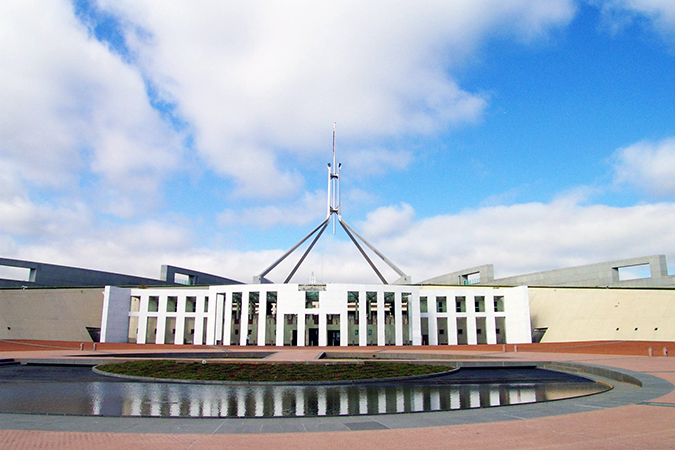
Proposed amendments that would end the ability of employers to terminate an enterprise agreement during a bargaining period, and which could enable unions to drag multiple separate employers into one round of enterprise bargaining were introduced to Parliament yesterday by Tony Burke MP, the Minister for Employment and Workplace Relations.
Minister’s second reading speech
Introducing the Fair Work Legislation Amendment (Secure Jobs, Better Pay) Bill 2022 yesterday (Thursday 27 October 2022), Minister Burke told Parliament that the bill was introduced to get wages moving; to end an era of deliberate wage stagnation; and to improve job security.
“At a time when the pressures of global inflation are hitting every household, our workplace laws are simply not up to date. Cost of living is about the gap between income and prices. No-one can seriously claim to care about the cost of living if they support continued wage stagnation. Today, inflation is running at 7.3 per cent and wages are at 2.6 per cent. Every day the impact of a decade of wage stagnation is felt by households trying to make ends meet,” the Minister said.
Arguing that Australia’s bargaining system is not working effectively, the Minister said that the new reforms would remove unnecessary limitations from an existing framework that already contemplates multi-employer bargaining.
Refresher: enterprise agreements and protected industrial action
An enterprise agreement is a type of collective employment agreement that governs the terms and conditions of employment. It is often negotiated between employers and employee representatives (trade unions) and the actual employees then vote on whether or not to accept an agreement. Trade unions can apply to the Fair Work Commission for “protected industrial action” (e.g. a strike) during the bargaining period for a new enterprise agreement. The industrial action is “protected” when it follows certain procedures and the protection means that no action can be taken against the employees or the trade union for taking industrial action that has been approved by the Fair Work Commission.
Termination of Enterprise Agreements
Part 12 of the bill envisages replacing the rules for terminating an enterprise agreement after its nominal expiry date has passed. An enterprise agreement may pass its expiry date during a period of enterprise bargaining. Typically, the enterprise agreement and all of its entitlements continue in force until the conclusion of the next agreement. However, following extensive periods of bargaining and industrial action, waterfront employers have particularly taken to applying to the Fair Work Commission to terminate an existing enterprise agreement. That could potentially put the workforce onto the terms and conditions found in Modern Awards which would be considerably less than the terms and conditions in an enterprise agreement. It’s a way for the employer to put pressure on unions and the workforce to agree a new enterprise agreement.
But the new bill will largely do away with that. If enacted, the bill would stop employers from unilaterally applying to the Fair Work Commission to terminate a nominally expired enterprise agreement where termination would result in the reduction of employee entitlements. That includes situations where the threat of termination could disrupt bargaining for a new agreement. The new laws now require the Fair Work Commission to consider the views of the employees, the employer and each employee organisation (i.e. trade union). The Fair Work Commission would have to consider whether the application to terminate was made at or near enterprise bargaining-time, whether bargaining was actually underway and whether termination would adversely affect the bargaining position of the employees.
The Fair Work Commission would be able to terminate an existing enterprise agreement where there is a “significant threat” to the viability of an employer’s business.
Multi-employer bargaining: “supported” bargaining
Two sets of multi-employer bargaining are envisaged in the new proposals. Under both sets, employers could be dragged into bargaining.
Under the “supported” bargaining rules, an application can be made for a “supported bargaining authorisation”. The Fair Work Commission will then consider the prevailing pay and conditions in the relevant industry, whether employers have clearly identifiable common interests, and whether whether the number of bargaining representatives would be consistent with a manageable collective bargaining process. Once an supported bargaining agreement is made, it appears that a trade union can then apply to have other employers brought into the bargaining agreement. The employees of that other employer must vote in favour. As the explanatory memorandum to the bill explains at paragraphs 894: “When a supported bargaining agreement is made and approved by the FWC, the agreement may then be varied to cover additional employers and their employees… an employee organisation may apply to the FWC for variation of a supported bargaining agreement to cover additional employers and their employees, if a majority of those employees want to be covered by the agreement.”
Multi-employer bargaining: “single interest employer authorisations”
Under the existing Fair Work Act rules, certain types of employers with “common interests” can apply for a “single interest employer authorisation” which allows them to bargain as if they were one employer with their employees. Examples given in the explanatory memorandum include schools in a common education system and certain public entities. However, the new bill sweeps away the restrictions on access to single interest employer authorisations. It enables employee bargaining representatives [read: “trade unions”] to apply for a single interest employer authorisation to cover two or more employers, subject to majority support of the relevant employees. Bear in mind that the waterfront is a very-heavily unionised sector, so it is most likely that employees will vote in favour. Paragraph 984 of the explanatory memorandum then makes clear that an employee organisation {read: trade union] would also be able to apply to the Fair Work Agreement to extend a single interest employment agreement to a new employer and its affected employees.
Handing an awful lot of control to unions
Shipping Australia has concerns about the proposed amendments to Australia’s employment laws.
Commenting on the bill, Captain Melwyn Noronha, CEO of Shipping Australia said: “noting that this is a large and complex bill and will take some time to fully digest, our initial reading suggests that the Albanese government is about to hand an awful lot of control over the whole supply chain – from pit to port and from port to supermarket shelf – to the unions.
“The bill appears to enable unions to force multiple employers to take part in enterprise bargaining. Enterprise bargaining leads to protected industrial action e.g. work stoppages. If these stoppages are frequent, intense, and worst of all, take place at the same time at each of the major container terminal operators, then there could be considerable disruption. And it’s not just container terminals under threat. Trucking, warehousing, distribution, and logistics businesses of all kinds, could be subject to renewed and intense industrial action.
“We could see container supply chains seize up, just as they did when the unions engaged in disruption during the worst parts of the COVID pandemic. Shortages of goods and a return to the snarl up of empty container logistics chains could re-occur. Importers and exporters could be hit with a loss of access to markets, fewer services, erosion of the economic value of goods which might get stuck en-route to customers, and increasing costs right across the supply chain. Without much in the way of countervailing power (which is being cut back by the Albanese government in this bill), key supply chain businesses such as waterfront terminals (but also including trucking companies, logistics centres and warehouses among others), could be forced to give in to unions.
“Giving in means companies right across the supply chain being forced to jack up prices to pay for union demands. Remember 99.96% of everything that comes into, or out of, Australia goes over a wharf. Higher costs and industrial disruption could worsen the competitive position of our major export industries, such as iron ore, coal, and gas, and it could spark increased inflation across the country at a time of already increasing prices.
“Ultimately, ordinary Australian families will pay the costs. They will pay through a lesser availability of goods at higher prices. Australian families can only hope that the unions will exercise goodwill and restraint. Because, otherwise, there’s very little to constrain unions in this bill”.