
By Shipping Australia
A wide range of government failures during the COVID disaster has been highlighted by Shipping Australia in its submission to the Senate Select Committee on Australia’s Disaster Resilience.
Set up in November 2022, the Select Committee is inquiring into Australia’s preparedness, response and recovery workforce models, and alternative models to disaster recovery.
Shipping Australia’s wide-ranging submission looks at many issues raised in the COVID disaster, and also highlights ongoing problems that make Australia more fragile in the face of a disaster and would hinder Australian recovery.
COVID-related highlights of our submission:
- Sea-freight is vital to the personal wellbeing of all Australians and to the Australian economy; however government officials (elected officials and public service officials) did not appropriately recognise and act upon these facts
- Government maritime-communications of all kinds during the COVID crisis were confusing, hard to find, hard to interpret and changed too frequently
- Government officials were unreasonably intransigent and did not adequately cater to the legitimate needs of the logistics industries across Australia
We also highlighted several current public policy areas that urgently need attention to prevent disasters being far worse than they need to be and / or which would hurt Australian recovery.
Current policy highlights of our submission:
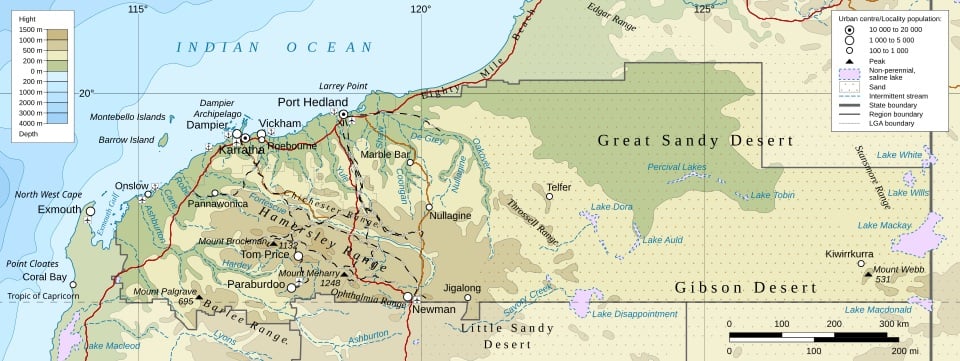
- The Coastal Trading (Revitalisation of Australian Shipping) Act 2012 – introduced by Prime Minister Anthony Albanese – hurts our disaster resilience because it reduces the ability to move vitally needed freight around the coast. As we were writing our submission, there was an urgent need to get sea freight into the Kimberley region by shifting cargo from one Australian seaport to another – but this was illegal because of Prime Minister Albanese’s Coastal Trading Act
- the so-called “strategic” fleet – let’s call it what it really is, it’s a politically-inspired fleet, could hinder disaster relief. A political-fleet will be sensitive to and subject to political decisions. We have already seen this play out in the east Kimberley crisis. The relevant Minister, Federal Transport Minister Catherine King, was, at all times, able to access expert ocean shipping advice and input from knowledgeable people. It was clear and obvious that she had the power to dis-apply the Coastal Trading Act and her officials could have engaged with WA officials to hire ships from the international fleet to carry desperately-needed aid into the east Kimberley. But, for whatever reason, Minister King did not do so and therefore Australians in the east Kimberley were forced into a position of food insecurity, with some on-the-ground commentators at-the-time saying that the local people were beginning to starve.
At the time, members of the international ocean shipping fleet had expressed a willingness to examine the transport of essential aid into the east Kimberley.
Minister King later said that no-one had asked her to intervene. - Australian industrial relations – the current landscape hurts our disaster resilience, and it will do so even more in the future. The Australian waterfront is subject to extensive, long-running strikes, which interrupt the vital flow of goods such as foodstuffs, medical supplies, and household goods to everyday Australian families. The Secure Jobs Act could massively magnify this problem as it grants the maritime unions the ability to put a complete stranglehold on the waterfront
- Potential blockages of seaports – there is a critical weak-spot in Australia’s disaster resilience. As a nation, we are overwhelmingly dependent on a few regional monopoly ports for the import of vital goods such as foodstuffs, clothing, medical supplies, household goods, fuel, and the like.
And those ports are overwhelmingly dependent upon a few critical points of failure – specifically, potential blockages of access channels, turning basins, and berths. There have been examples of potential seaport blockages happening in Australia. It is only through a mixture of excellent seamanship, hard work by the people involved and good luck that we have not had a major blockage of our seaports.
We have produced a list of recommendations. To find out more, keep an eye on the submissions page of the Select Committee into Australia’s Disaster Resilience as it should be published there in due course.