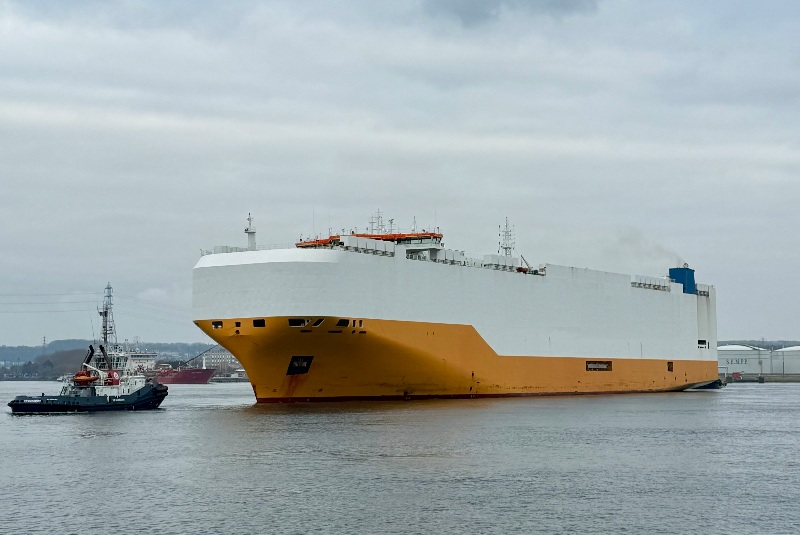
Motor vehicle fires aboard car-carrying ships of all kinds have been recognised as both dangerous and challenging and now, as we move into the electric vehicle era, new challenges abound. It is also noted that a fire that spreads from a conventionally-powered car to an electric vehicle has the potential to increase the complexity of the fire and the response to the fire. High level guidelines have been created by the Vehicle Carrier Safety Forum, a group of ship operators, insurers, and industry experts who are all seeking to promote safety aboard vehicle carriers.
The Forum says that the guidelines have been developed to reduce the risk to life, the environment, and to the vessel by helping ship operators and crew be better prepared.
The guidelines are just that: guidelines. They do not include emerging technical solutions, or detailed matters of design, equipment, or procedures. “Instead, they provide a framework for vessel operators to use to inform their own more detailed procedures,” the guidelines say.
Fires that originate from vehicles with lithium-ion batteries that are undergoing thermal runaway (a rapid and uncontrolled increase in temperature inside the battery) have been shown in shipboard fires to be difficult to handle. Conventionally powered car fires also pose problems once the fire really gets going.
“For these reasons the VCSF has focused on early suppression of fires using fixed firefighting systems,” the guidelines say.
Pre-fire
Details of vessel construction, in particular, the fire-resistance properties of decks and bulkheads, ought to be considered when developing plans. Vessel operators should always ensure that the stowage plan is up-to-date and consideration ought to be given to stowing electric vehicles in defined areas.
Response times and actions
When a fire is in its early stages the local fire party should be used to control or fight the fire. Ship masters should have in mind the agreed trigger points for the use of fixed firefighting systems.
However, it should be noted that car fires typically reach their peak heat release from six to ten minutes after the fire starts, the guidelines say, and if the initial response does not have a fire under control within ten to 15 minutes of the sounding of the first alarm, then the use of fixed firefighting systems is recommended by the guidelines.
Company policy should be clear that the vessel master has the authority to deploy fixed firefighting systems if pre-agreed trigger conditions are met. Such triggers could include fires in two or more vehicles; multiple alarms being activated in the same compartment or fire zone; fire in electric vehicles; and more. Company policy should support an early and correct use of fixed firefighting systems and there should be appropriate documentation, training, and drills – both for port and seagoing operations.
Fires in port
A “detailed plan” for fighting fires in port should be developed and this should include a range of factors such as ensuring the safety of third parties; liaison with stevedores; understanding the time it takes for doors and ramps to be secured to segregate fire zones; consideration of liaising with local fire services and more.
A wide range of other issues were discussed such as the risk of fires from re-ignition, expert assistance, and the vapour cloud that is produced when a battery goes into thermal runaway of when there is boil-off of fuel from a conventionally-powered vehicle.
Read the Guidelines
‘Fire Response – High Level Guidelines’