
Hailed variously as “historic”, “groundbreaking”, and “landmark” by supporters but described by detractors with words like a “wish and prayer”, a “sinking feeling,” and “serial procrastinator,” the International Maritime Organization appears to have delivered delight and despair in equal measure.
International shipping has been committed to halving greenhouse gas emissions peak “as soon as possible” and then to reach net-zero by, or around, 2050, by delegates from the countries of the world who met for IMO’s Marine Environment Protection Committee (number 80).
Net zero is the key aim of the IMO’s revised Greenhouse Gas Strategy and it substantially improves on the key aim of the Initial Greenhouse Gas Strategy of 2018. The earlier strategy committed shipping to a cut of 50% while also “working towards” a 70% cut in greenhouse gas emissions by 2050 when compared to a baseline of 2008.
There were several other key revisions too.
Ambition level one
First-up is the “level of ambition” to have the carbon intensity of shipping to decline through further improvement of energy efficiency for new ships with the aim of strengthening the energy efficiency design requirements. There’s not much that is ground-breakingly new in this specific level of ambition.
The IMO’s earlier work in 2011 led to the introduction of an “Energy Efficiency Design Index” for new ships which, in 2013, made it mandatory that new ships must meet a minimum efficiency benchmark, with that benchmark reducing every five years. There are different benchmarks for different ships, and for vessels of different sizes. The new ship index is based on the By 2025, all new ships will be 30% more energy efficient than those built in 2014, the IMO has previously said.
There is a massive amount of work that has been done in this area and it is now generally accepted that individual ships can become considerably more efficient, as the infographic below indicates:

Delegates to MEPC 80 did agree a variety of technical changes, such as corrections on the comparison of tank sizes to dual fuel engines in the Energy Efficiency Design Index survey and certification guidelines, according to class society DNV.
Ambition level two
The second level of ambition if for the carbon intensity of international shipping to decline when expressed as the reduction of C02 emissions per transport work as an average across international shipping by at least 40% by 2030 when compared to 2008. Again, little new here in this specific level of ambition as it appeared in the IMO Initial 2018 Greenhouse Gas Strategy.
The IMO has previously carried out much work in this area leading to the introduction of the Energy Efficiency Existing Ship Index and the Carbon Intensity Indicator. These are two similar programmes in which an energy efficiency baseline is set and that ships have to meet that baseline, with the caveat that the baseline reduces over time so ships have to become ever-more efficient.
DNV reports that the delegates to MEPC 80 have agreed a plan to review the short-term greenhouse gas reduction measures i.e. the Energy Efficiency Existing Ship Index and the Carbon Intensity Indicator. There will be a data gathering phase until MEPC 82 in 2024 with a view to finalising measures by mid-2025. There will be no immediate changes to the Carbon Intensity Indicator framework before the completion of the review.

Ambition level three
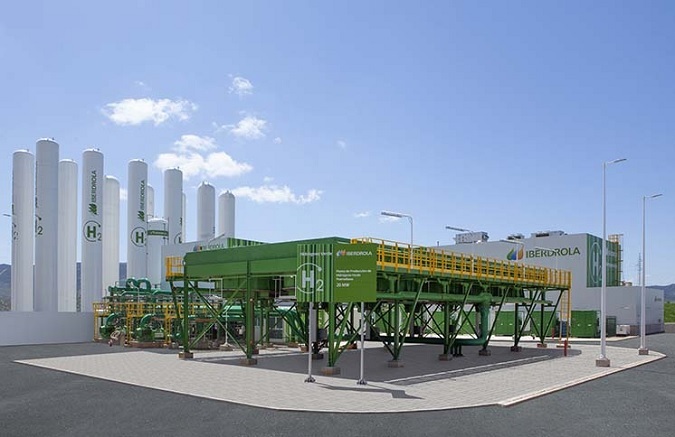
The third level of ambition is new and this is to have an uptake of zero, or near-zero, greenhouse gas emission technologies, fuels, and / or energy sources to represent at least 5% (while striving for 10%) of the energy used by international shipping by 2030.
This ambition level seems to be particularly important and has attracted commentary. For instance, marine consultants UMAS, have argued that “This is a key enabler of early investment into the long-run solutions that can ensure this decade will see emergence and increasing use of zero emissions technologies and supply chains, ready for their rapid scaling from 2030”.
This is a view backed up by Simon Bennett, International Chamber of Shipping (ICS) Deputy Secretary General, who remarked: “this historic IMO agreement gives a very strong signal… to energy producers who must now urgently supply zero GHG marine fuels in very large quantities if such a rapid transition is to be possible.”
UMAS have also added that: “The conversion of this into the detail of a policy measure, and a finer definition of ‘zero or near-zero GHG emission’ technologies, will need to wait until the adoption of mid-term measures (expected in 2025)”.
It is worth noting the key wording of “energy” here alongside fuels as “energy” would be more inclusive and could include wind-assisted propulsion technologies such as kites, sails, and Flettner rotors among other things.
Ambition level four
This ambition is the it is adoption of net-zero emissions by 2050. It appears to be radically different from previous iterations of the IMO’s greenhouse gas strategy. To help reach that goal, two indicative checkpoints have been set.
The first indicative checkpoint is to reduce the total yearly greenhouse gas emission from international shipping by at least 20%, striving for 30% by 2030, compared to 2008.
The second indicative checkpoint is to reduce total annual greenhouse gas emissions from international shipping by at least 70%, striving for 80% by 2040 when compared to 2008.
The second indicates a radical shift in posture. Remember: the Initial 2018 GHG Strategy called for a 50% cut by 2050 while striving for 70% cut when compared to 2008.
Mid-term measures
Before we get to the mid-term measures, an interested reader may well ask what the short term measures are or were. These are / were the new ship design efficiency index, the existing ship design index, and the carbon intensity indicator.
The mid-term measures will include a “basket” of candidate measures that can deliver on the reduction targets. They will include a “technical element”, namely a goal-based marine fuel standard regulating the phased reduction of the greenhouse gas intensity of marine fuel.
Global fuel standard
The IMO reckons that the fuel standard will “create a predictable demand for low- and zero-GHG fuels, which will result in more investments in the production of those fuels and the required bunkering infrastructure. Therefore, it is expected that these fuels will be produced in a large scale worldwide”. The IMO adds that the fuel intensity in the standard would be lowered gradually over time, thereby allowing countries to adapt and also minimising the impacts of the fuel transition.
Noting that the zero-emissions fuels willy likely not be available in all ports during the transition, it is proposed that there be a scheme of credits / debits (called “Flexible Compliance Units”) that would allow ship operators to exchange under- and over-compliance across ships. That exchange could be within the same fleet or with other operators.

Economic element – that’s a levy, a tax, or a cap and trade scheme to you and me
Secondly, and this should prove to be interesting, the second element will be some kind of “economic element” based on a maritime greenhouse gas emissions pricing mechanism. That’s going to be some kind of levy, or fee, or tax, or an auction of emissions cap and trade scheme.
One proposal to the IMO (by Norway) is a cap and trade system whereby some kind of credit would be auctioned. This would affect, if implemented on the 2019 fleet, about 63,500 ships at or above 400 Gross Tons. With some understatement, the IMO notes that such a scheme would generate “considerable revenues” in the range of $130 to $140 billion per year from 2030. Norway wants to use the funds to support climate action in developing countries and to speed-up the introduction of sustainable low- and zero-emissions fuels and technologies, in particular, green fuels and infrastructure capacity.
A levy on everyone!
Another proposal, by a consortium of Pacific Island countries, is to impose a global greenhouse gas levy at the point of sale on bunker fuel. Another attractive measure owing to its relative simplicity, it’s ability to send a clear, strong, signal, and the likely impacts it would have on demand. The revenues could then be spend on research, development, and maritime projects.
While this would have the benefit of simplicity and less administrative burden, it could bear the burden of not raising as much money as other measures and it is likely it might not actually change behaviour. The initial price was set in 2019 and it was thought that it could be USD$100 ton / carbon dioxide equivalent.
The problem here is that we already know that such a price is most unlikely to change behaviour much. Fuel prices are volatile. They can be very low, or very high. For instance, Very Low Sulphur Fuel Oil (Singapore) was priced at USD$206.50 / tonne on 22 April 2020 (right at the start of the temporary COVID-induced slump in world trade). By 10 June 2022, that same fuel was priced at USD$1149 (about four months on from the Russian invasion of Ukraine in the war that began in 2014).
That’s a big price range, with a difference of USD$942.50 between the two prices. The fuel hit every price point inbetween, and the world went through one of the largest booms in trade in living memory.
So what would an extra USD$100 levy do to change behaviour? Well, probably nothing. This is the same point made by Dr Roar Adland FICS, global head of research at Simpson Spence Young, in the context of the EU’s emission trading scheme.
That said, there is a proposal for a universal bunker levy to work hand-in-hand with the global fuel standard.

So what does the IMO propose to do next?
The 2023 Strategy has set out a timeline for the adoption of a basked of measures.
By MEPC 81 (early in 2024) there should be an interim report on the impact of the candidate measures. By MEPC 82 (later in 2024) there will be a finalised report on the impacts. MEPC 83 in 2025 will see a review of the short term measures (the Efficiency Existing Ship Index and the Carbon Intensity Indicator.) MEPC 84 (2026) will see approval of various measures and the review of the short term measures should be complete. All of which will lead to an “extraordinary” one or two-day MEPC that will hopefully see measures adopted in 2026.
Reactions!
Reactions were, of course, mixed.
The Clean Arctic Alliance described the IMO as a “serial procrastinator on black carbon emissions,” and expressed “dismay” at what they described as a “bland, and weaker version of their earlier ambitions”. Meanwhile, pressure group “Seas at Risk” said that civil society groups are “deeply concerned” by the “failure to firmly align global shipping with the Paris Agreement’s 1.5 degrees C temperature-warming limit” and that it was “disappointed at the weak ambition to push for further action”.
However, industry reaction was far more favourable.
IMO Secretary-General Kitack Lim said: “the adoption of the 2023 IMO Greenhouse Gas Strategy is a monumental development for IMO and opens a new chapter towards maritime decarbonization. At the same time, it is not the end goal, it is in many ways a starting point for the work that needs to intensify even more over the years and decades ahead of us. However, with the Revised Strategy that you have now agreed on, we have a clear direction, a common vision, and ambitious targets to guide us to deliver what the world expects from us.”
“Above all, it is particularly meaningful, to have unanimous support from all Member States. In this regard, I believe that we have to pay more attention to support developing countries… so that no one is left behind,” he said.

Industry bodies welcomed the agreement that was struck at the IMO.
Speaking at the close of the intensive two-week session, Simon Bennet, the Deputy Secretary General of the International Chamber of Shipping said that the “ICS greatly welcomes the ambitious agreement reached by governments at IMO today for shipping to achieve net zero emissions ‘by or around 2050’… “The checkpoints agreed for 2030 and 2040 are particularly ambitious. The industry will do everything possible to achieve these goals including the 70 to 80 percent absolute reduction of GHG emissions now demanded of the entire global shipping sector by 2040″. He also called upon member states of the IMO to agree a global levy to support a “fund and reward” mechanism as has been proposed by the ICS.
Another global shipowner / operator group, BIMCO, commented that it sees the MEPC 80 agreement as” groundbreaking. The newly adopted IMO GHG reduction strategy translates to a reduction of around 90% on average at the individual ship level due to expected fleet growth. And 2040 is only 17 years from now. Newer ships already on the water and those on order will exist well beyond 2040 and the emissions reduction outlined in the strategy will apply to these ships.
BIMCO President Nikolaus Schües added “I cannot stress strongly enough to my colleagues in the industry that this is already happening as we speak. The profound change in the way ships must be built, operated and fuelled will impact every shipowner on the planet. Investment decisions need to be reassessed, designs need change and business models will be forever impacted”.
John Butler, President and CEO of the World Shipping Council added, “this [agreement] marks a new beginning for shipping’s energy transition, with clear goals and milestones. There is much to do, and carriers are eager to continue the work together with regulators, fuel providers and technology providers to reach our shared climate targets. Liner shipping is already investing in renewable fuel-ready ships, and [the agreement] broadcasts a strong global signal for investment to the entire maritime sector. We are counting on the IMO member nations to press on with the important work of developing and adopting a robust regulatory framework that will make these fuels available and competitive”.