The Krgyz Republic has become that latest member of the International Maritime Organization (IMO), the specialist global body that regulates international shipping.
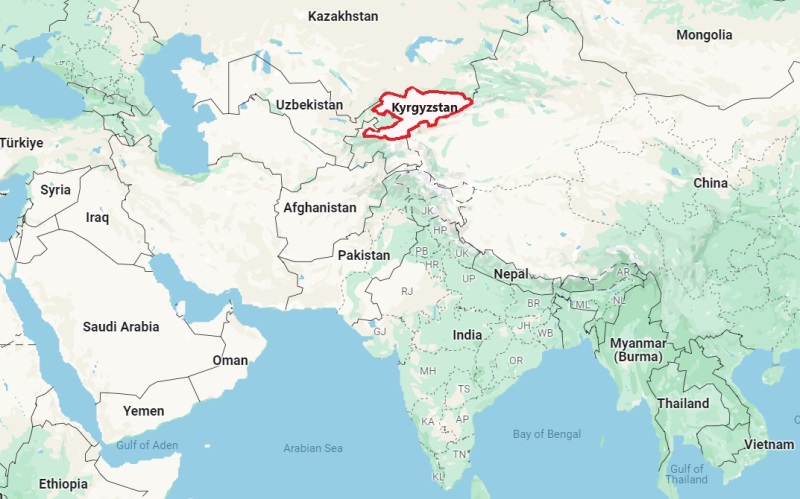
The Republic, more commonly known as Krygyzstan, is located in Central Asia, to the south of Kazakhstan and north of Afghanistan and Pakistan. It’s most southerly point is the part of the country that is closest to the open ocean and there is a roughly 1,630km distance between the two.
Even though they may be landlocked, all countries have a right of access to the ocean. The sea is legally deemed under Article 136 of the United Nations Convention on the Law of the Sea (UNCLOS) to be part of the “common heritage of mankind”.
Article 87 of UNCLOS rules that “the high seas are open to all States [i.e. countries] whether coastal, or landlocked,” while Article 90 adds that: “every State, whether coastal or land-locked, has the right to sail ships flying its flag on the high seas”.
Accordingly, it makes sense that all countries in the world can join the IMO so as to be part of the global maritime regulatory system, the provision of which is the primary purpose of the IMO.
Article 1(a) of the IMO Convention (as amended) reads:
“The purposes of the Organization are: (a) to provide machinery for co-operation among Governments in the field of governmental regulation and practices relating to technical matters of all kinds affecting shipping engaged in international trade…”.
Set up in 1948, following the United Nation’s Geneva Conference, the IMO (which was originally named as the Inter-Governmental Maritime Consultative Organization) was established initially the global regulator for the freedom of shipping, prevention of nationality-based discrimination, and the safety of navigation. The IMO’s focus on marine pollution and the environment was developed later. Although Canada was the first to ratify the IMO Convention in 1948, the IMO Convention did not enter into force until March 1958 when the threshold of 21 countries with a combined tonnage equalling or greater than one million gross tons of shipping was exceeded when the countries of Egypt and Japan ratified the Convention.