New information-provision rules for managing biofouling will take effect on 15 June 2022.
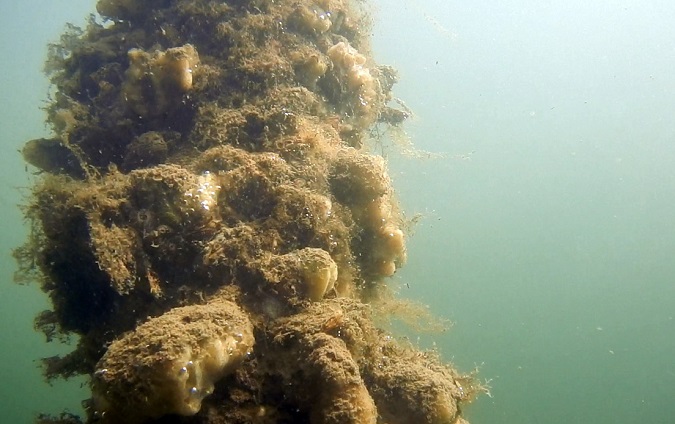
“Biofouling” refers to the attachment and growth of marine organism on submerged structures and on the underwater parts of a ship such as the wetted area of the hull, propeller, and anchor.
What ship operators will have to do
Ship operators will be required to provide information on how biofouling has been managed before arriving in Australian territorial waters, which is about 12 nautical miles from the coast (about 22.2 km). Ship operators will report the data through the Department’s Maritime Arrivals Reporting System.
The Australian Department of Agriculture, Water and the Environment reports that the information provided will be used to target its interventions. Vessel operators will receive less interventions if they comply with one of three accepted biofouling management practices:
- Implementation of an effective biofouling management plan;
- Have cleaned all biofouling within 30 days prior to arriving in Australian territory
- Implementation of an alternative biofouling management method pre-approved by the DAWE.
Information to be included in the report includes details of any inspections for, cleaning of, or treatment for, biofouling either before a vessel’s arrival in Australian territory or during its time in Australia. Other information sought includes details of any practices in any plan of biofouling management and details of a ship’s voyage history over the last 12 months.
The Australian Department of Agriculture, Water and the Environment, state that from 15 June to 15 December 2023, an “education first” approach will be taken.
About biofouling
The International Maritime Organization has adopted “Guidelines for the control and management of ships’ biofouling to minimize the transfer of invasive aquatic species“. The IMO reports that vessel biofouling and the ballast water of ships can be pathways for the spread of marine organisms around the world.
A wide range of organisms – both plants and animals – can attach themselves to ships. These include algae, sponges, anemones, molluscs and crustaceans (barnacles), about 4,000 different species in total.
Examples of invasive marine species in Australia include “Asterias amurensis,” (the North Pacific Seastar) from the North West Pacific Ocean. The Seastar is a “voracious carnivorous feeder” and a “prolific breeder”. It eats the eggs of certain fish species, along with sessile creatures such as mussels, scallops, and clams which can be detrimental to aquaculture and wild fisheries. Another prolific invader is “Carcinus maenas,” (the European Shore Crab), another voracious predator on molluscs and crustaceans. It can also out-compete native species and can cause damage through its behaviour, such as burrowing.
Further reading:
“Managing biofouling in Australia“
“Biosecurity Amendment (Biofouling management) Regulations 2021 (Explanatory Statement)“
“Biosecurity Amendment (Biofouling management) Regulations 2021”