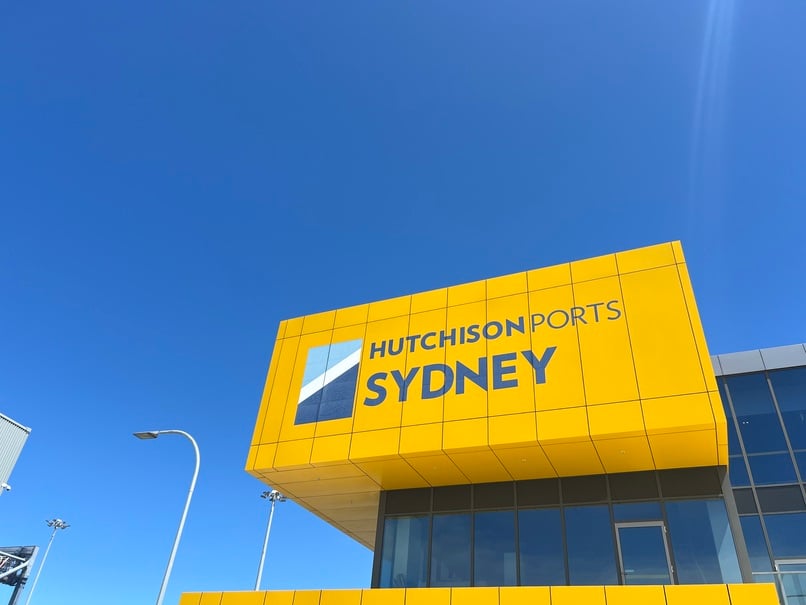

It is “imperative” to adopt modern rostering, container terminal operator DP World has said in relation to its ongoing industrial relations dispute with the Maritime Union of Australia.
“DP World must re-evaluate and update its rostering structure in line with this strategy to offer employees greater flexibility and to attain a more even distribution of work,” the company says, adding that it wants to extend weekend work opportunities to a broader range of colleagues and to promote the equitable distribution of shifts and availability among its workforce.
It’s a change that the company says will foster a robust supply chain capable of withstanding unexpected disruption.
However, it’s also a change that is contested by the MUA, which, the company says, “is continuing to disrupt Australia’s supply chain through ongoing protected industrial action (PIA) at DP World’s Brisbane, Fremantle, Melbourne, and Sydney terminals”.
The company has experienced a substantial drop in volumes by about 30% to 40% since the start of the dispute so that the company, which was formerly handling 6,000 boxes a day, is now handling about 4,000 boxes a day.
The dispute is not only doing significant harm to the company, it is doing significant harm to Australia.
Figures from respected transport economists Houston Kemp, show that, for each full one-day cessation of activity at all of DP World’s terminals across Australia, it disrupts containerised imports and exports to the value of AUD$201.6 million per day. The direct estimated loss in value to Australia stands at AUD$10.1m a day.
However, there is a multiplier effect that ripples through the economy. Think of goods. Then think of all the trucking, warehousing, unpacking, last-mile distribution, marketing, sales promotions, and retailing activity that thousands of containers would generate.
A reasonable estimate of that multiplier (based on an average of studies of that multiplier) is about 2.2 times. So the direct and indirect economic damage to Australia amounts to about AUD$20.2 m each day.
And it needs to be borne in mind that Australian wharfies are hardly in the same position as Charles Dickens’ era consumptive orphans forced to go up chimneys every day.
DP World points out that:
- Generally, employees within 6 months of commencement, receive a minimum annual salary of $81,336 which require no formal training or qualifications and before any allowances and loadings.
- With allowances and loadings that recognise our 24/7 operations, the real earnings for employees sits around $130,000 pa.
- Entry-level permanents on rosters offer salary positions of $105,465 for Sydney; $106,761 for Fremantle; $96,765 for Brisbane and $111,965 for Melbourne. Skilled crane operators’ base salaries range up to $146,924, within a 35-hour work week, complemented by relevant allowances.
- When considering all our employees covered by the current EA nationally, this contributes to average annual earnings of $144,000.
- This compensation package, supplemented by bonuses and overtime, firmly establishes DP World’s employees among the highest income earners in Australia.
- The average DP World employee covered by the EA earns more than 90% of other Australian taxpayers.
- DP World has long rewarded its employees with additional benefits, including paying superannuation at 12% since 2015, and paying for income protection insurance for all employees.
- DP World employees also receive 5 weeks annual leave and up to 13 days personal leave per annum.
Shipping Australia firmly supports DP World in this dispute.
Its employees are already very well paid and have generous leave entitlements.
At a time when the rest of Australia’s employees are buckling under the effects of inflation, soaring mortgage costs or soaring rent, this industrial action is simply unfair and unwarranted.
It is time for the union to return to the negotiating table and for wharfies to go back to work.