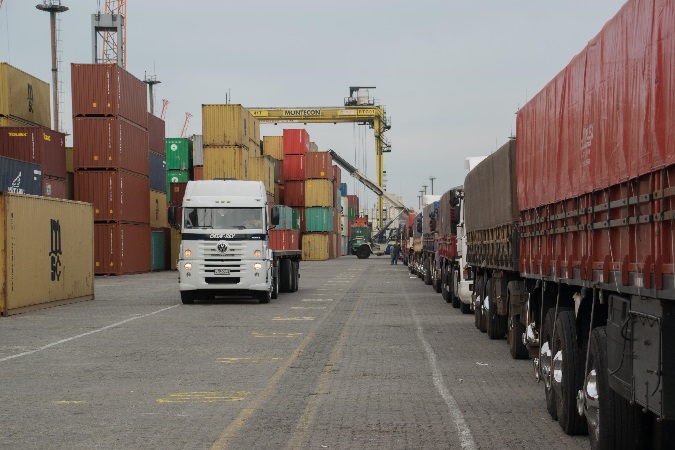
Terminal Access Charges ought to be governed by a mandatory industry code, the Productivity Commission (PC) has recommended in its final report on the Australian Maritime Logistics System.
The PC envisages that the Australian Treasury would be responsible for developing a landside charges code that would then be administered and enforced by the ACCC. A federal code is the PC’s preferred option as it would ensure consistency between terminals in different jurisdictions, especially as the states and territories are not in a position to implement or enforce a national code.
The PC envisages that:
- fees should only be changed once a year and that pre-notification of changes be issued
- the ACCC should have the authority to reject increases if it considers them to be unjustified
- if an increase is rejected than alternative changes in charges would be prohibited
- the ACCC’s baseline for charges should be 01 December 2022
- the ACCC should collect metrics
- there should be an obligation on the ACCC to do an annual report
- consideration should be given as to penalties
- the code should be reviewed after five years of operation
Shipping Australia is of the view that stevedores – as the owner / operators of container terminals – have a fundamental right to charge transport operators for access to the terminals if the stevedores so choose.
It is quite reasonable to ask a customer to pay for access to a service. And, yes, trucking and rail companies are customers of container terminal operators. Once a stevedore begins charging money in return for access to a terminal then the person who pays that money is a customer. Paying money in return for access to goods or services is literally the dictionary definition of the word ‘customer’.
It has often been written that “all businesses face a dilemma of how to deal with unavoidable costs such as rent, infrastructure, labour and power. Those same business are then forced to either absorb these costs or pass them on to their commercial clients”.
This is a truism, indeed. And who can argue with a truism as, after all, it is true.
However, it can then be said that trucking operators and other land transport operators could either absorb operating costs, such as Terminal Access Charges, or to pass them on to their commercial clients (importers, exporters, shippers, consignees, freight forwarders etc). Such commercial clients then have the choice to absorb the cost of Terminal Access Charges or pass those costs on to their own customers through prices, negotiated rates, and charges.
There is no justification for seeking to impose landside transport costs on third parties, especially when those third parties (ocean going shipping lines) do not use the landside infrastructure (roundabouts, roads, truck holding bays etc). And especially when ocean shipping companies pay their own fees to use sea-port infrastructure, such as navigation service charges.
In relation to whether or not the price levels of Terminal Access Charges are justified, whether or not there have been too many increases etc, are not issues on which Shipping Australia is expressing an opinion. It is our view that such matters are for the container terminal operators, and their customers (i.e. land transport operators such as trucking companies) to resolve between themselves.
If they are unable to resolve it between themselves then it may well be appropriate to have government intervention to regulate the relationship between the terminal operator and the land transport operator.