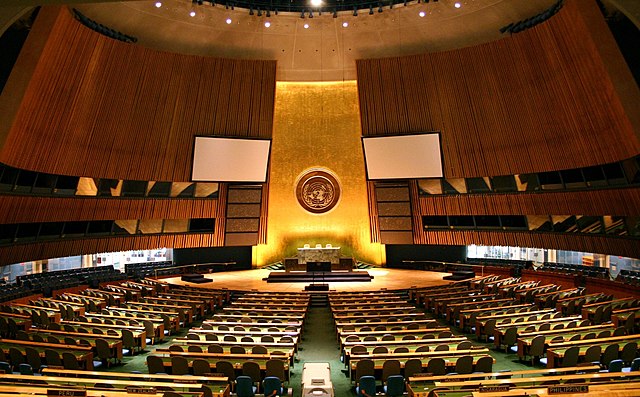
An agreement on the text of an international treaty to protect marine life on the high seas was reached in early March in New York.
The UN began work in 2015 for a new international legally-binding treaty under the United Nations Convention on the Law of Sea on the conservation and sustainable use of marine biological diversity of areas beyond national jurisdiction.
The new treaty is informally being called “the High Seas Treaty”, and more specialised publications and commentators are calling it the BBNJ (Biodiversity Beyond National Jurisdiction).
The new treaty will provide a legal framework for designating areas of the High Seas as being protected for the benefit of marine life. According to the International Maritime Organization, the new treaty will address:
- the conservation and sustainable use of marine biodiversity beyond national jurisdictions;
- marine genetic resources, including questions on benefit-sharing;
- area based management tools, including marine protected areas;
- environmental impact assessments; and
- capacity-building and the transfer of marine technology
The High Seas are all those parts of the global world-ocean that are beyond all national jurisdiction, which is currently all parts of the ocean that are 200 nautical miles (approx 370 km) from the shore of any country. According to Geoscience Australia, the world’s oceans cover about 361 million square kilometres, of which 219 million square kilometres (approx 60%) is high seas.
A spokesman for the UN Secretary General, António Guterres, said that the Secretary-General commends delegates for finalizing a text to ensure the conservation and sustainable use of marine biological diversity of areas beyond national jurisdiction.
“This action is a victory for multilateralism and for global efforts to counter the destructive trends facing ocean health, now and for generations to come. It is crucial for addressing the triple planetary crisis of climate change, biodiversity loss and pollution… the Secretary-General looks forward to continuing working with all parties to secure a healthier, more resilient, and more productive ocean, benefiting current and future generations,” the statement reads.
The IMO Secretary General, Kitack Lim, added: “I am pleased to see the conclusion of the new legally binding instrument on marine biodiversity in areas beyond national jurisdiction… This landmark achievement will no doubt reinforce efforts to protect biodiversity in line with the aims of the 2030 Agenda for Sustainable Development and the Kunming-Montreal Global Framework for Biodiversity. IMO has participated throughout the negotiations given the organisation’s mandate and expertise and will continue to participate, in the implementation of the new instrument”.
The IMO added that it has been present throughout the negotiations and has actively cooperated with a variety of UN divisions such as the Division for Ocean Affairs and the Law of the Sea (DOALOS) of the Office of Legal Affairs of the United Nations and with other specialized agencies such as the International Labour Organization (ILO).
The institution added that IMO officials have outlined IMO’s experience in developing universal binding regulations for international shipping to ensure shipping’s sustainable use of the oceans, through more than 50 globally-binding treaties. Ships plying their trade across the world’s oceans are subject to stringent environmental, safety and security rules, which apply throughout their voyage.
IMO regulations are enforced through a well-established system of flag, coastal and port State control.