Bulk carrier, Mount Tourmaline, said to be the world’s first liquefied natural gas powered Newcastlemax bulker has fuelled-up ready for the WA / Asia trades. According to a statement from the operator, Eastern Pacific Shipping, the vessel has fuelled up at Singapore. A “Newcastlemax” is, as its name suggests, the biggest size of ship that can physically fit into the Australian port of Newcastle.
The 209,000 deadweight ship is one of a fleet of five such bulkers on charter from EPS to iron major, BHP. The vessels will carry iron ore from WA to Asia.
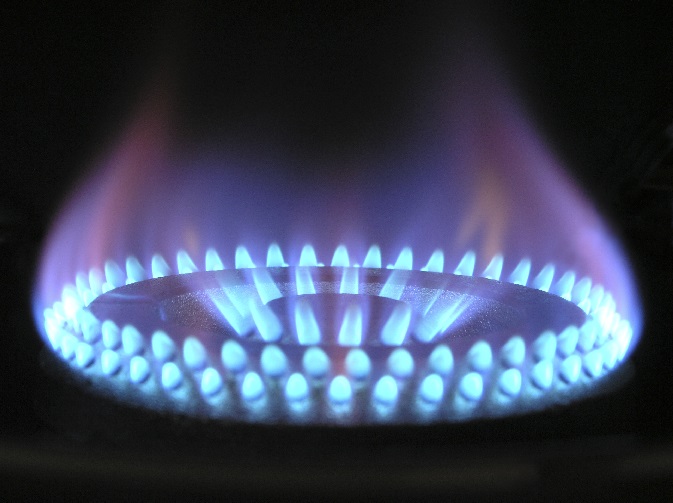
Liquefied Natural Gas (LNG) is a colourless, odourless compound gas consisting mostly of methane (about 70% to 90%) with small amounts (up to 20%) of ethane, propane and butane. It has small-to-trace amounts of other gases such as carbon dioxide, oxygen, nitrogen, hydrogen sulphide, and rare gases (argon, helium, neon etc).
Methane has a specific energy (energy by weight) of 55.6 megajoules per kilogram and an energy density (energy by volume) of just 0.00378 megajoules per litre. Happily, LNG shrinks in volume by about 600 times when cooled to minus 161 degrees Celsius, which makes the transport and use of the gas economically viable. LNG has a specific energy of 55.6 mj / kg and an energy density of 22.2 mj / litre.
As a fuel, LNG produces about 25% less carbon dioxide emissions compared to regular bunker fuel. Emissions of new carbon dioxide can be cut dramatically if LNG it is blended with bio-matter sourced LNG. Carbon in bio-matter (such as agricultural waste) originates in the atmosphere and is drawn from the air by plants during their lifespan. Natural gas is formed from waste plant material and carbon is returned to the atmosphere during combustion. Burning LNG also reduces nitrogen oxide emissions by 90% while also eliminating sulphur oxide and particulate matter emissions.
The global LNG trade hit a volume of 316.5 million metric tonnes in 2018, up by 9.8% year-on-year when compared with 2017, according to the International Gas Unit World LNG Report 2019.
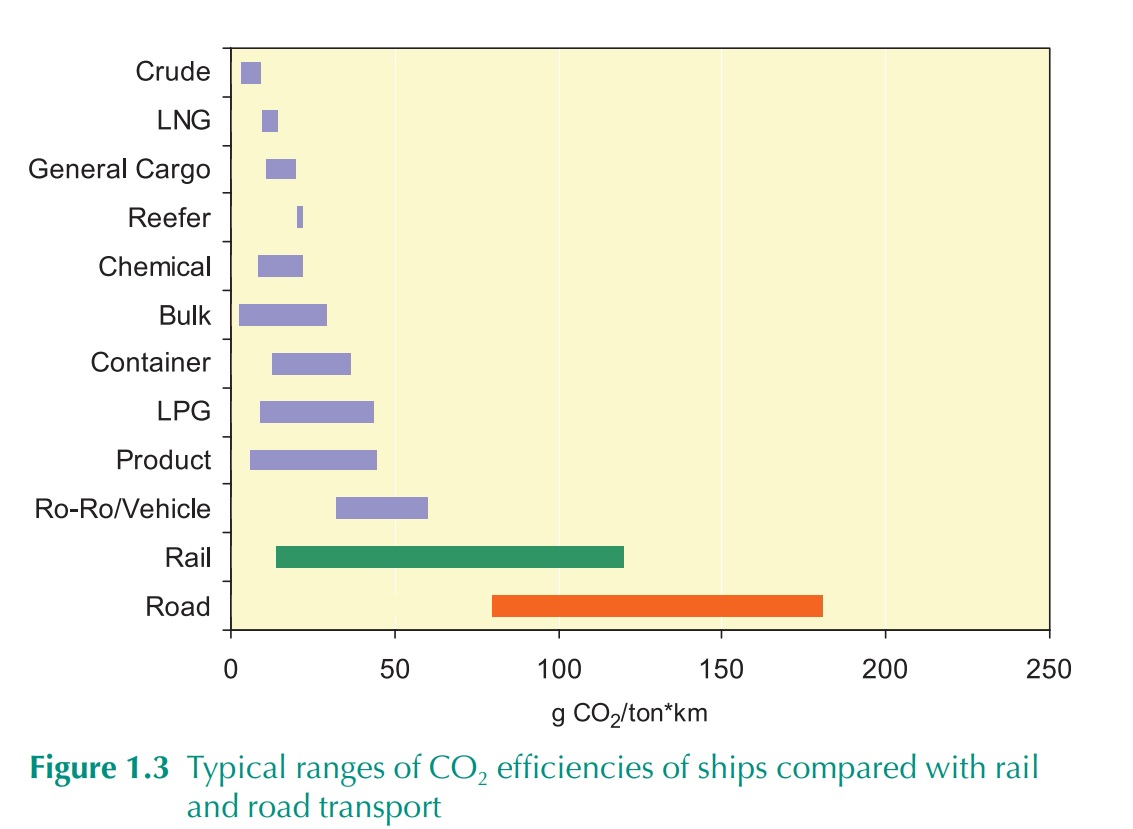
Shipping is already – by far – the the most environmentally-friendly way to move freight (see Figure 1.3). Shipping will become even cleaner as, longer-term, it appears that the maritime industries are likely to move toward a variety of clean power sources.
Small watercraft (everything from powered dinghies to larger vessels like harbour tugs and short-run ferries) will likely be powered by batteries that will be charged up by shore-side electricity. Small coastal freight carriers, like coastal tankers and small box feeders might also go battery-powered too.
Small niche trades focused on robust cargo that’s in steady, predictable, demand may even use sail! There are serious proposals for sail ships to carry rubber tyres on various routes around the world. There are also a variety of kites, sails and wind-powered devices (Flettner rotors) that can use the wind to help propel ships, along with a variety of software that enables ships to optimally take advantage of currents.
At the moment, it looks like the world fleet of bigger freighters, like box ships and dry bulkers, will probably be powered by some combination of LNG, methanol (an alcohol), biofuels, and ammonia.
The front-runner at the moment has to be LNG given that there are large LNG-powered ships currently trading, but this is likely to be a transitional fuel. There’s a possibility that hydrogen could be in the mix but its still very much an emerging technology with a lot of research to be done.
However, the others (methanol, biofuels, ammonia) are deep into trials and the development of systems for practical use. The future shipping industry may well be powered by methanol, given the huge investments made in that technology and given that a small fleet of methanol-powered freighters will soon (within a couple of years) set sail. Ammonia is being intensively researched and there are some trial projects underway.
The future of marine fuel will be fascinating… and diverse.