August 7, 2020

Waterfront strike threat: how the industrial relations environment has been – legally – manipulated to Australia’s detriment

Widespread strike action on the waterfront is now possible. Transport unions have arranged matters so that all of the major container stevedores are now operating with expired enterprise agreements.

The last major container stevedore had its enterprise agreement expire in June. Nation-wide and sector-wide protected industrial action by unions is now therefore possible under the Fair Work Act.

Some of those enterprise bargaining arrangements have in fact been expired for years because the unions have refused to make a new agreement.

It now appears that the reluctance to make a new agreement was part of a plan to make possible nation-wide and sector-wide industrial action. Having the power to call simultaneous strikes right across the waterfront boosts the bargaining power of the unions.

When a company has an expired enterprise agreement, its employees (via their union representatives) can take “protected industrial action”.

This means actions such as strikes, work-to-rule, go-slow campaigns and so on can take place in an attempt to encourage concessions from the employer. Industrial action typically (but not always) takes the form of a series of stoppages ranging from an hour to several days.

It is especially noteworthy that unions are seeking to impose a ban on their members from loading or unloading ships that have been sub-contracted from one stevedore to another.

If stevedores cannot sub-contract the ships then the stevedore’s bargaining power is reduced and the bargaining power of the unions is increased.

Protected industrial action is “protected” in that it is legal and the employer generally (but not always) cannot go to court to stop the industrial action.

An uninterrupted flow of foodstuffs, everyday goods, medical supplies, merchant and intermediate goods to Australian families, hospitals and businesses is vital to Australia’s national interest:

  • Australia is the fifth largest user of shipping services in the world
  • About 98% of our seaborne trade by volume, and 79% by value, depends on ocean shipping
  • In 2018-2019, the total value of Australian exports was $373 billion while the total value of imports was $421 billion
  • Seaborne imports and exports drive the Australian logistics sector. As a whole, the logistics sector in 2013 represented 8.6% of the nation’s GDP, and directly contributed $131.6 billion to GDP
  • The logistics sector employs about 1.2 million people. That’s about 9.7% of the 12.3 million of all the people employed in Australia

Read our opinion in full here.

Facebook
Twitter
LinkedIn
Email

Search

Become a Member

Membership is open to all ship owners, operators and agents both Australian and International providing services to or within Australia.

Upcoming Events

Dec 4
NSW State Committee Christmas Luncheon 2026
NSW State Committee Christmas Luncheon 2026 FRIDAY, 4 DECEMBER 2026  1200hrs for 1230hrs At the “W” HOTEL  in the GREAT ROOM at 31 Wheat Rd, Sydney NSW 2000 SYDNEY DARLING HARBOUR  PROUDLY SPONSORED BY  SUPPORT SPONSORS              
Nov 27
SAL Victorian State Committee – Special End of Year Luncheon
  SAL Victorian State Committee Special End of Year Luncheon FRIDAY, 27 November 2026 1230 to 1500 At the Royal Automobile Club, 501 Bourke Street, Melbourne VIC 3000   PROUDLY SPONSORED BY  We would be delighted to have the pleasure of your company at Shipping Australia’s final event of the year. The luncheon features international...
Nov 12
YSA NSW End of Year Celebration 2026 – Sydney Harbour Tug Tour & Drinks
Join YSA for our end of 2026 celebration: a tug tour of Sydney Harbour followed by drinks and nibbles at the pub! Hosted by Svitzer, YSA are lucky to board and learn about some of the hardest working vessels in Sydney Harbour during one of their busiest periods of the year. Learn about the work...

Latest News

Port call optimisation pilot projects reveal emissions savings potential, new report shows
Commercial ships spend between 4% and 6% of their operating year waiting outside ports. That idle time is one of the clearest inefficiencies in shipping, and a combination of slower sailing speeds and port call optimisation can reduce the emissions and fuel currently wasted as ships await an available berth. Instead of sailing fast only...
IMO adopts frameworks to assess marine geoengineering research activities
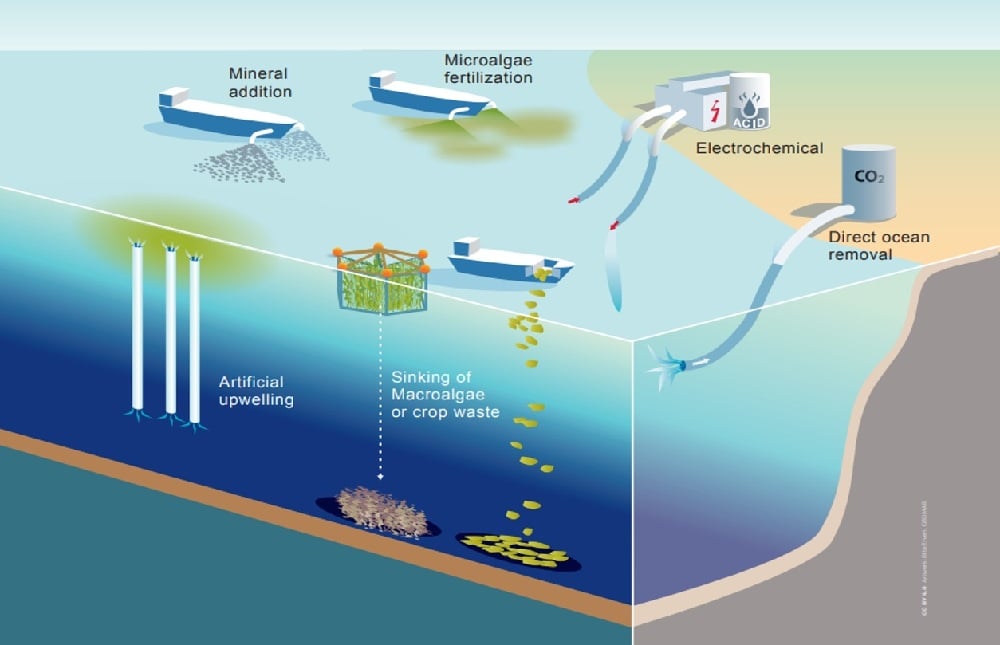
New guidance will help governments evaluate marine geoengineering research proposals to ensure they are safe for the environment. The International Maritime Organization (IMO) has adopted new guidance aimed at ensuring marine geoengineering research avoids unacceptable impacts, amid growing interest in climate change mitigation technologies. Marine geoengineering involves methods to increase the ocean’s capacity to absorb...

Latest Magazine

Shipping Australia Winter 2026
June, 2026

Subscribe to the Signal Newsletter

Be the first to know about releases and industry news and insights or catch up on any editions you missed.

Search