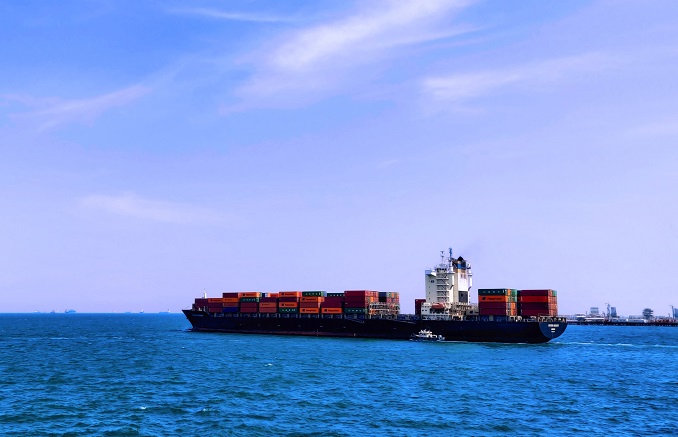

CMA CGM and TotalEnergies have entered into an agreement to develop a 50/50 logistics joint venture dedicated to the implementation and operation of a liquefied natural gas (LNG) bunker supply solution at the port of Rotterdam, in the Netherlands.
The TotalEnergies-CMA CGM JV will offer a complete logistics service in the Amsterdam-Rotterdam-Antwerp (ARA) region.
A 20,000 m³ LNG bunker vessel will be jointly deployed and operated by 2028.
Under a new long-term agreement, the joint venture will supply CMA CGM up to 360,000 tons of LNG per year until 2040.
The CMA CGM-TotalEnergies JV will offer a complete logistics service, from reload access at Gate terminal facilities to LNG bunker delivery to a wide range of vessels operating in the Amsterdam-Rotterdam-Antwerp (ARA) region, including those of CMA CGM as well as other shipping operators.
To support CMA CGM’s goal of reaching Net Zero Carbon by 2050 and ensure the supply of its dual-fuel LNG-powered fleet, which will grow to 123 vessels by 2029, the joint venture will supply CMA CGM with up to 360,000 tons of LNG annually, from 2028 onwards and until 2040.
“LNG is today the most mature and immediately available solution to reduce the environmental footprint of maritime transport. This strategic partnership not only strengthens our position as a major player in LNG bunkering but also illustrates the shared commitment of two leading French companies to actively support the energy transition,” said Patrick Pouyanné, Chairman and CEO of TotalEnergies.
Rodolphe Saadé, Chairman and CEO of CMA CGM Group, said: “For the first time, a shipping company and an energy provider will jointly operate an LNG bunkering vessel, based in the port of Rotterdam. It is a concrete way to scale up alternative fuels and accelerate the decarbonization of global trade”.
According to CAM CGM, “Used as a marine fuel, LNG helps cut greenhouse gas emissions by up to 20% compared to conventional marine fuel and has the potential to reduce emissions significantly more if bio or synthetic (respectively -67% and -85% of GHG emissions). It also significantly improves air quality by reducing nitrogen oxides (NOx) emissions by up to 85%, and it almost completely eliminates (by 99%) sulfur oxides (SOx) and fine particles”.