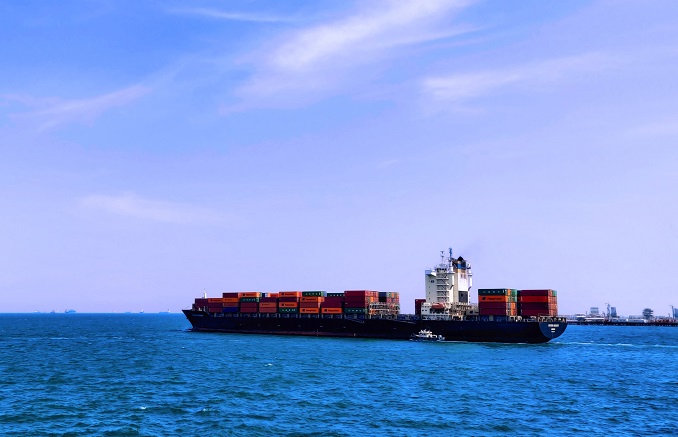
Biosecurity inspections by officials from Australia’s federal Department of Agriculture are now carrying-out joint inspections with Port State Control officers from the Australian Maritime Safety Authority.
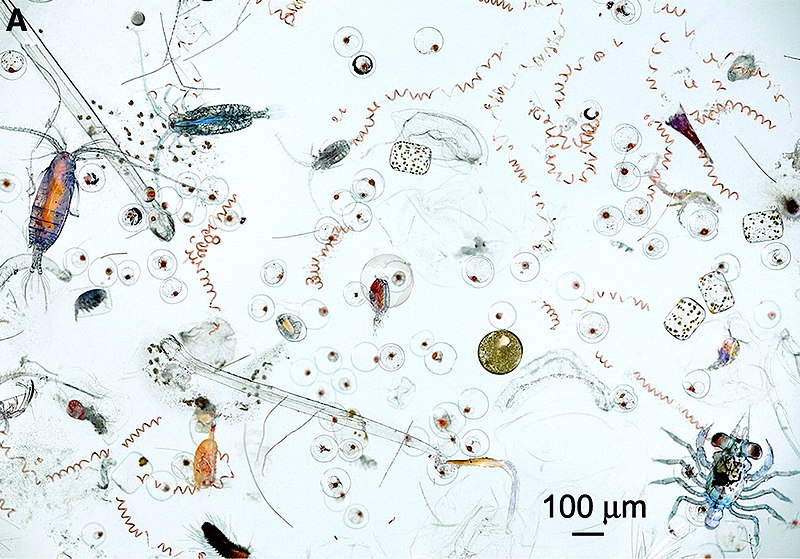
Officials will be focused on Ballast Water Management and inspections will run through September, October, and November. Ships will be inspected for compliance with the International Convention for the Control and Management of Ships’ Ballast Water and Sediments, 2004 (aka the Ballast Water Management Convention) See the “Further reading” section, below, for details of ballast water issues.
Globally, each vessel will only be subject to one ballast water inspection for the duration of the campaign. Inspection length will be variable based on the vessel’s preparedness and availability of the Responsible Officer, the Australian Department of Agriculture says. Where possible the concentrated ballast inspection will be combined with other inspections to avoid duplication.
Tokyo MoU and Paris MoU join efforts
Back in early August this year, the Tokyo and Paris MoUs on Port State Control announced that their members – port state control agencies across their respective jurisdictions – would launch a joint concentrated inspection campaign. The campaign was set up to promote the effective and consistent application of the convention.
“The results of the campaign will be analysed and findings will be presented to the governing bodies of both MoUs for possible submission to the International Maritime Organization,” reads a joint statement from the Paris and Toko MoUs.
What is Port State Control?
According to the Port State Control was set up in 1978-1982 so that national governments could check workforce matters on ships, along with adherence to global pollution and safety standards.
In 1978, the Paris MoU was set up as an administrative agreement between 27 maritime authorities under the Hague Memorandum. On 19 March 1978, the very large crude oil carrier Amoco Cadiz ran aground owing to a steering gear failure, and the tanker then broke up on the French Coast, spilling about 223,000 tonnes of crude oil and 4,000 tonnes of bunkers. The subsequent political outcry led to demands for more comprehensive rules on the safety of life at sea, the prevention of ship-source pollution, and living and working conditions onboard ships.
A new MoU was drawn up which was then signed and entered into force in 1982.
Legal justification / history
As ships are in the national territory of the nation they are visiting, then the laws of that nation largely (but not exclusively) apply. Port State Control is a means of using national law to uphold international law and standards.
While the modern version of this kind of international law is fairly recent, it has a lengthy history. Countries and kings have long asserted control over foreigners in their territory. On a more ‘modern‘ note, back in the early 1600s, Dutch lawyer and jurist Hugo Grotius rose to historical legal fame for his published legal analysis, specifically his 1609 “De Jure Praedae Commentarius” (the Law of Prize & Booty!) and, specifically, its chapter 12, “Mare Liberum” (which translates into “free seas” or “freedom of the seas”). In that chapter, Grotius argued that no-one could seize or control the whole sea (the so-called sovereignty of the sea) but he recognised that a coastal State had rights over a maritime belt next to its territory.
There followed a centuries-long slew of jurisprudence, smuggling, geopolitics, war and diplomacy.
Today, Article 3 of the UN Convention on the Law of the Sea (1982) says that nations can claim a territorial sea of up to 12 nautical miles from their shore. The 1982 Convention built upon the earlier work in the 1958 Convention on the Territorial Sea and Contiguous Zone, which stated that the sovereignty of a country extends beyond its coast, but which never described the width of the territorial sea.
Further reading
Explainer: ballast water – the solution, the threat, the solution – this Explainer is probably the best place to start. It is a simple, Plain English, explanation of the problem, and its history, together with a description of various solutions that have been tried. It also has a description of the various legal instruments, and a simple explanation of the Ballast Water Convention. It also has a range of links to good quality further reading.
Ballast Water Management (IMO)
Ballast water management – the control of harmful invasive species (IMO)
BWM Convention and Guidelines (IMO)
Implementing the Ballast Water Management Convention (IMO)
Ballast Water Management Convention (Class NK)
History of [the] Law of the Sea – Ancient Times to 1648 and UNCLOS, Andree Kirchner