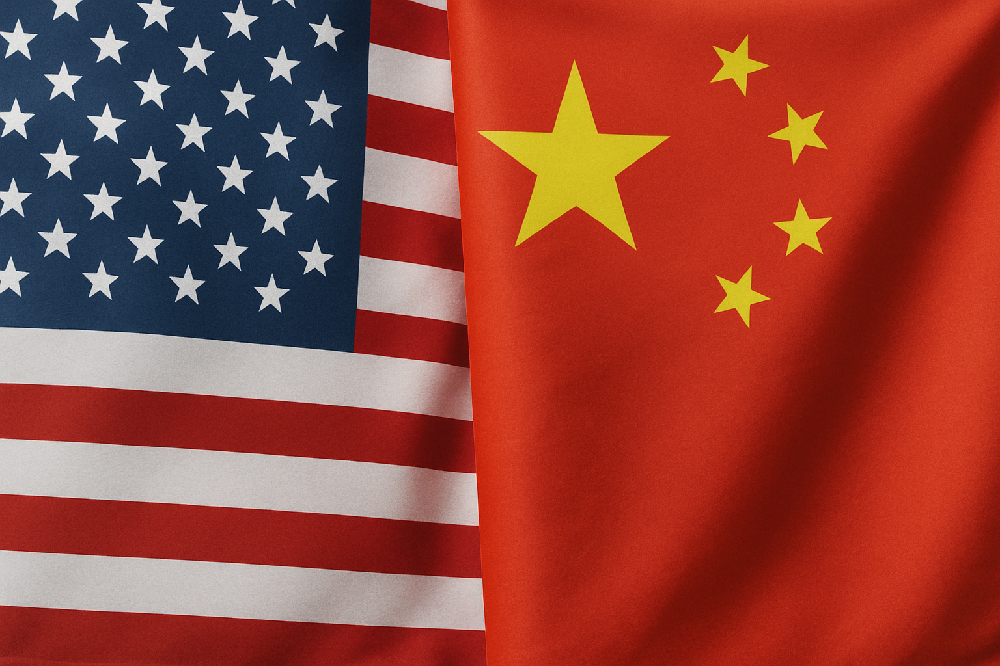
Following the recent Presidential meeting in Busan South Korea, yesterday (30 October) between Presidents Trump and Xi, it appears an agreement has been made for the two sides to suspend their shipping levies for one year, alongside a variety of tariff cuts.
The news was revealed in reporting by Xinhua, the Chinese State News agency which reported: “中美元首釜山会晤举行后,美方将暂停实施其对华海事、物流和造船业301调查措施一年…”
The translation (*see note below) is said to read: “After the meeting between the Chinese and U.S. heads of state in Busan, the U.S. side will suspend for one year the implementation of its Section 301 investigation measures targeting China’s maritime, logistics, and shipbuilding industries”.
The International Chamber of Shipping welcomed the news of the apparent breakthrough, stated it was looking forward to confirmation, and added that:
“The reports of the U.S.’ agreement to suspend the Section 301 port fees on China’s maritime, logistics and shipbuilding industries by one year, and the agreed reciprocal suspension of China’s countermeasures targeting U.S.-linked ships, is a welcome and positive development.
“ICS supports the ambition to increase U.S. shipbuilding capacity and to make the United States Shipbuilding industry strong, as additional commercial tonnage strengthens the global maritime sector’s efficiency and competitiveness. However, the port fees imposed by the USTR on 14 October 2025, and subsequently by China as countermeasures to U.S.-linked ships, has already posed significant challenges and disruptions for the shipping industry and global trade.
“At ICS, we strongly advocate for the need for shipping to be able to move trade freely and efficiently, and remain committed to working collaboratively with all administrations and international partners to avoid any disruptions to the flow of global trade”.
Leading container analyst Lars Jensen of Vespucci Maritime noted that, at this point, it is unknown when the vessel fees will be suspended.
“Given this is a time-limited suspension it would likely see shipping lines maintain a deployment stance whereby they to some degree still abide by the restrictions and certainly keep a plan for vessel-reshuffling handy. Overall, this does point to some de-escalation in the trade war between US and China, but there is not necessarily a long-term certainty of the trade environment given that some of these agreements are 1-year only,” Mr Jensen commented.
—————————-
* The material in the text above was translated by ChatGPT, version 5. An alternative, but similar, translation by Google Translate reads: “Following the Busan summit between the Chinese and US leaders, the US will suspend its Section 301 investigations against China’s maritime, logistics, and shipbuilding industries for one year…”