February 13, 2026
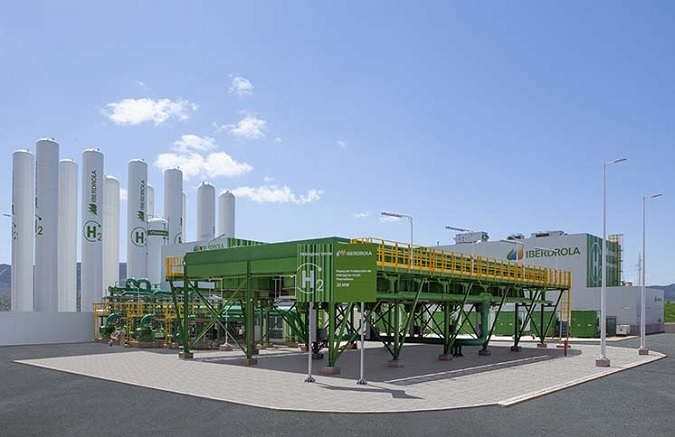
Pictured: an artist's impression of a green hydrogen production plant to be build by Spanish energy giant Iberdrola. Hydrogen can be produced in an environmentally friendly way by using renewably-source energy (such as from the sun, wind, or waves) to create electricity that is used to split water into oxygen and hydrogen. Hydrogen when combined with carbon, and oxygen can be used to create methanol (CH3-0H), an alcohol that can be used as a marine fuel. Graphic credit: Iberdrola.

New fuels, same old conventions?

The International Group of P&I Clubs writes:

With IMO’s 2050 decarbonisation targets for the shipping industry looming large on the horizon, the number of ships on the water or ordered with a capability to run on a low-carbon or carbon-free fuel continues to rise.

But will the liability and compensation regimes designed to deliver swift and easy access to compensation when bunkers are spilt keep pace?

Changing fuels – but to what?

Figures from DNV highlight that whilst only a tiny part of the current fleet are equipped to burn low or carbon free fuels, the numbers are set to grow exponentially. Already, 21% of the newbuildings contracted in the last twelve months are dual-fuel, with methanol and LNG (not itself a carbon-free alternative but one of the so-called “bridge fuels” facilitating the transition from conventional fossil fuels to renewable energy sources) leading the pack in terms of an alternative to IFO or MDO.

Other fuels – like ammonia, hydrogen and LPGs – are also contenders but there is as yet no clear sense of direction of in which technology shipowners will invest their capital. The same sense of uncertainly also surrounds the bunkering market, where the absence of a clear sense of direction behind one or other of the potential new fuels discourages investment in port handling and bunkering facilities for fear of making the wrong bet.

Known knowns – bunker spills today

Currently, the spillage of bunkers, whilst undoubtedly messy and often a cause of environmental damage, is at least a largely known threat. It creates a toxic pool in the marine environment which needs to be cleaned-up, but which often gets washed ashore and causes harm to people’s livelihoods. But unless it is directly ingested there is little risk to human life, it typically doesn’t catch fire very easily and over the last half a century or so a global  network of responders have developed effective means of clearing it up.

New liability perspectives

But what happens if there’s a leakage of a new type of fuel, methanol or LNG say?

Read the full insight from the International Group of P&I Clubs here!

Facebook
Twitter
LinkedIn
Email

Search

Become a Member

Membership is open to all ship owners, operators and agents both Australian and International providing services to or within Australia.

Upcoming Events

Oct 10
Industry Gala Night 2026
Industry Gala Night 2026 – A Masquerade Affair Shipping Australia Limited Queensland is delighted to announce the return of our highly anticipated Industry Gala Night 2026. Following the outstanding success of last year’s sold-out event, we are excited to once again bring together industry leaders, valued partners, sponsors, and supporters for an unforgettable evening of...

Latest News

Day of the Seafarer – 25 June 2026
Next Thursday is the U.N. recognised “Day of the Seafarer”. The day highlights the hardship, pressures, and risks of life at sea, especially in conflict-afflicted areas. The recent Middle East conflict between the United States, Israel, and Iran, is a prime example as the conflict saw 46 vessels attacked with the loss of 14 seafarer...
Too many standards, too much red tape, not enough lifetime to deal with it
Multiple, diverging, standards are not helpful for a global industry like shipping. Nor, indeed, are they generally good for society either. A new case study and analysis, commissioned by the International Chamber of Shipping and the European Shipowners Association supports the need for single standards. There are key areas of divergence between the EU Ship Recycling...

Latest Magazine

Shipping Australia – Annual Review 2025
January, 2026

Subscribe to the Signal Newsletter

Be the first to know about releases and industry news and insights or catch up on any editions you missed.

Search