SEA.AI has been awarded a public tender by Spain’s Ministry for the Ecological Transition and the Demographic Challenge, to supply AI-powered maritime machine vision systems to support marine research, conservation, and maritime safety.
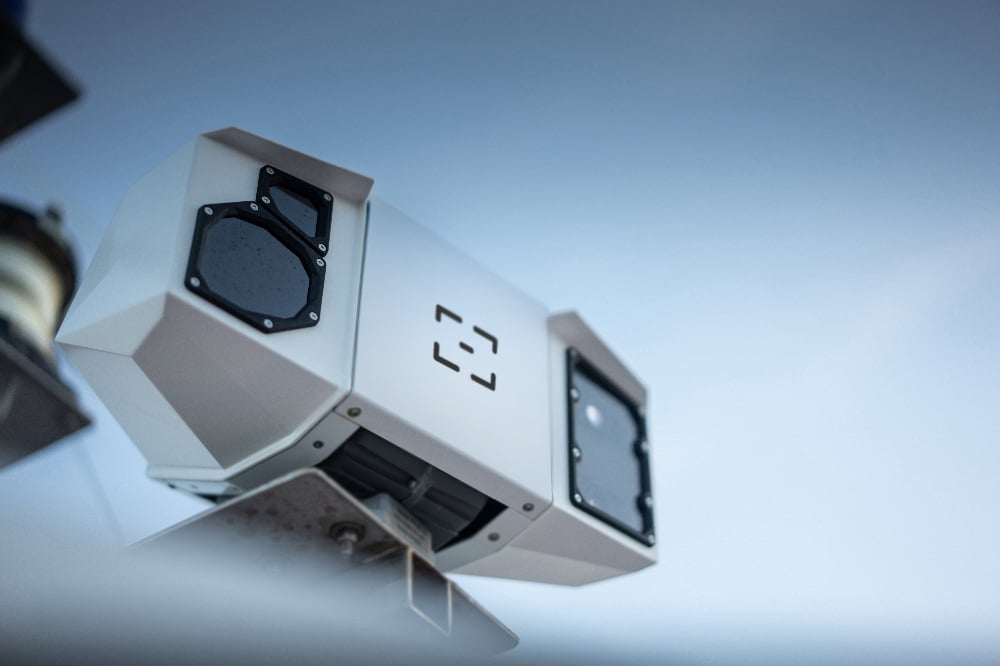
The company’s technology has been designed and developed to fill in what it says are gaps between human lookouts, radar and AIS. The company says artificial intelligence-equipped technologies can detect and recognise ships and large boats, small boats, persons in the water, and other floating obstacles. The company’s technologies computes input from low-light and thermal onboard cameras (with detection of temperature differences of up to 0.05 degrees Celsius) to develop a view of the surroundings of a vessel.
The contract, secured in collaboration with SEA.AI’s regional partner, TMS Maritime Solutions, includes the delivery of seven SEA.AI systems for deployment across a range of vessels and operational environments.
The initiative will improve the detection and monitoring of marine mammals, particularly whales, while enabling broader evaluation of advanced sensing technologies in real-world conditions.
Scientists and authorities are working to better understand marine mammal behaviour, which poses risks to both vessels and threatened populations. By combining optical and thermal imaging with artificial intelligence, SEA.AI systems enable continuous, real-time detection and classification of objects and marine life.
Beyond marine mammal detection, AI-powered machine vision has broad applications in enhancing safety at sea for recreational boats and commercial vessels, the company indicated in a statement, adding that its technology improves situational awareness for crews, helping to reduce the risk of collisions and supporting critical safety applications such as person-overboard detection.
“This project comes at a critical moment, as interactions between vessels and marine mammals are becoming both more visible and more complex,” said Esteban Campos, Sales Manager at SEA.AI. “Crews need the ability to detect and react to avoid collisions, even in low visibility or at night. That’s exactly where AI-powered machine vision can make a difference.”
SEA.AI was founded in 2018 by Raphaël Biancale, automotive engineer, and Gaëtan Gouerou, former Managing Director of IMOCA. Working with offshore racing teams, they re-engineered automotive vision technology into a maritime system. In 2020, over half of the Vendée Globe fleet, a solo nonstop round-the-world race, relied on SEA.AI technology. The company opened an office on the Australian Gold Coast in 2025 to service the Asia-Pacific region.