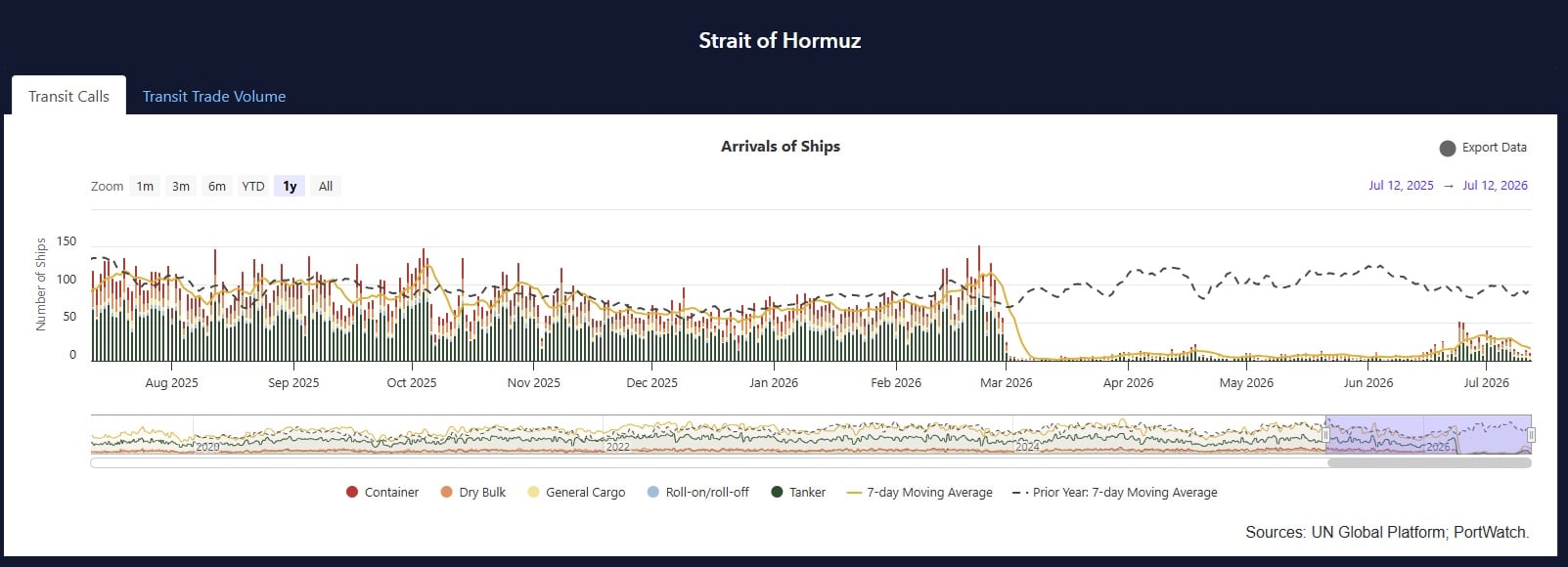
Ship traffic to and from Iranian seaports is blockaded by the United States Central Command (“Centcom”) as of 16:00 U.S. Eastern Time on July 14. Centcom has reinstated the blockade of Iran following new directions from U.S. President Donald Trump earlier this week, following a resumption of hostilities against commercial shipping.
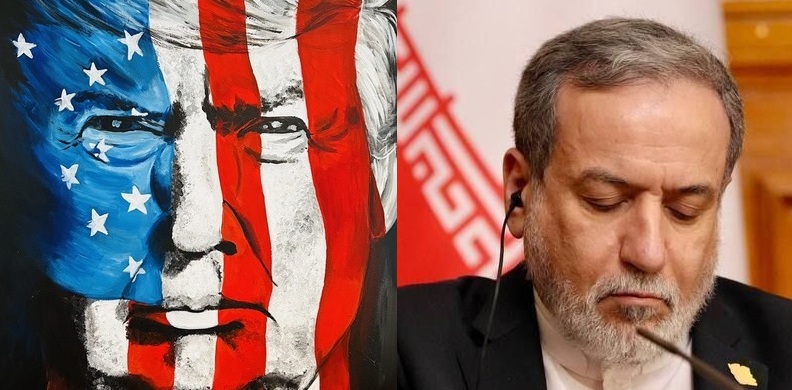
Writing on his Truth Social platform, President Trump declared on July 14 that “[t]he Hormuz Strait is OPEN, and will remain OPEN, with or without Iran. We are reinstating the THE IRANIAN BLOCKADE, so named because it is only stopping Iran’s ships or customers from entering or leaving. All other countries will have fair and open use of the Strait”.
Since then, U.S. forces have enforced the naval blockade. They disabled an unladen oil tanker attempting to sail toward an Iranian port. The Curacao-flagged Belma was observed transiting international waters toward Kharg Island, a major Iranian oil-loading facility. U.S. Centcom stated that the vessel ignored “multiple warnings” as it attempted to run the U.S. blockade. A U.S. aircraft fired hellfire missiles (laser guided air-to-ground munitions) into the ship’s smokestack and the ship is not longer transiting toward Iran.
“U.S. forces remain vigilant and prepared to ensure full compliance,” reads a statement from U.S. Centcom.
Centcom noted that the the initial U.S. blockade against Iran from April 13 to June 18 saw Centcom forces redirect more than 140 compliant vessels, disable nine non-compliant ships, and allowed over 50 commercial ship supporting humanitarian aid to pass through the blockade. Centcom advises mariners to monitor notices to mariners, and to contact U.S. naval forces on bridge-to-bridge channel 16 when operating in the Gulf of Oman and the Strait of Hormuz approaches.
Demand for a security fee then a change of mind
The President also declared that the USA would, from that point forward, be reimbursed at a rate of 20% of all cargo shipped for any and all costs necessary to provide safety and security. He also declared in the same post that the U.S. would henceforth be known as “THE GUARDIAN OF THE HORMUZ STRAIT”.
However, a day later, on July 15, President Trump announced on Truth Social he had changed his mind on the 20% fee based on “highly productive conversations,” with Middle East leadership. The fees will be replaced with trade and investment deals that the Gulf States will make into the United States, he said.
Iranian response
Seyed Abbas Aragachi, the Iranian Foreign Minister, responded that President Trump is “absolutely right” as whoever provides secure and safe passage of commercial vessels through the Strait should be compensated, he said.. “Iran has always been the GUARDIAN of the Strait and will remain so FOREVER. 20% is of course too much. We will be fair,” he said in a statement.
A spokesperson for the Iranian Armed forces, Colonel Ebrahim Zolfaqari, commented that “America’s repeated adventurism and malicious acts to interfere in the management of the Strait of Hormuz have seriously endangered regional security, international trade, and the passage of oil tankers and commercial vessels,” he said.
“Accordingly, it is hereby declared that, following previous warnings, we will not, under any circumstances, allow the United States to interfere in the management of the Strait of Hormuz, and we will not do so in the future… The Armed Forces of the Islamic Republic of Iran will deal severely with any disruption or insecurity caused to commercial vessels and oil tankers by the aggressive and piratical American army operating outside Iran’s designated route and without the authorization of the Armed Forces,” Zolfaqari added.
Zolfaqiri also issued threats against any regional nations that co-operate with the United States. Since then, attacks by Iran have been reported on the Port of Duqm (Oman), along with non-maritime targets in Qatar, Kuwait, Bahrain and Jordan.