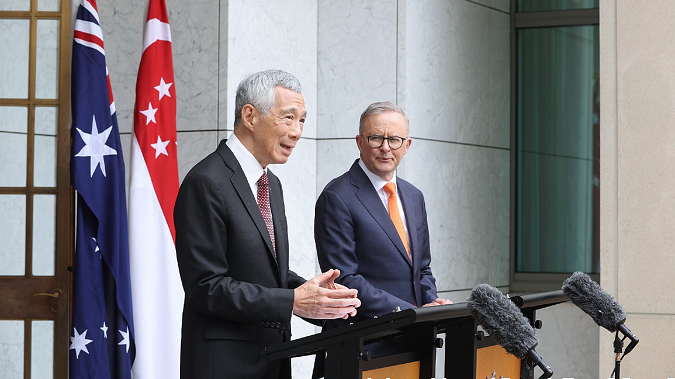
Australia’s Prime Minister, Anthony Albanese, and Singapore’s Prime Minister, Lee Hsien Loong, signed a world-first “Green Economy Agreement” in Canberrra earlier this week to boost trade and investment in clean energy.
Mr Albanese commented: “The Green Economy Agreement extends well beyond a simple bilateral trade agreement. This world-first agreement establishes a framework under which our countries can advance work on the clean energy transformation and support businesses and industry. This is a model that will support both Australia and Singapore, and partners in our region to seize the economic opportunities of the global transition to net zero.”
Mr Lee commented that the agreement will “support the transitions of our countries to net zero emissions and at the same time, boost growth and create jobs in the green sectors. It is the first such agreement of its kind between countries, and we hope that it will be a pathfinder for other countries, similarly to cooperate with one another to deal with what is a global problem”.
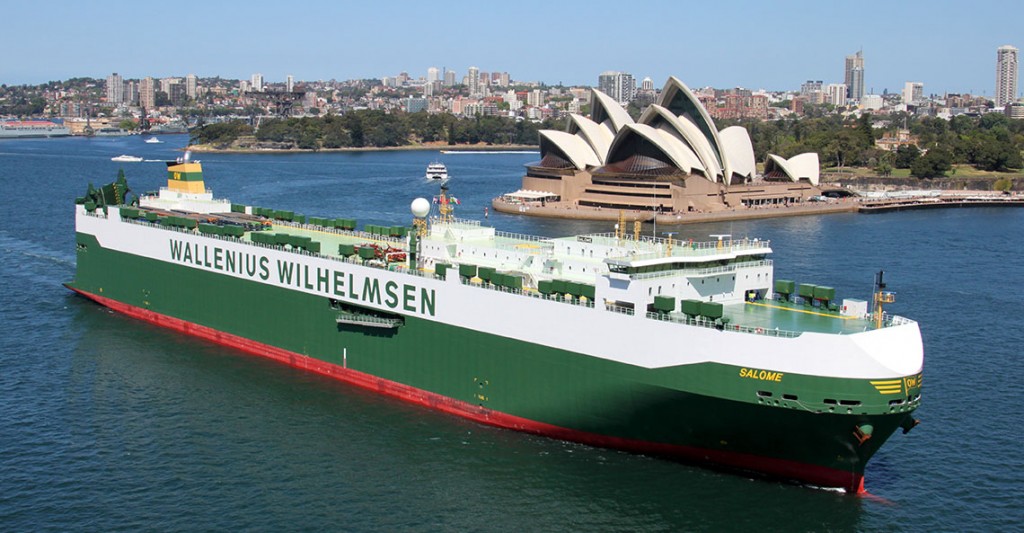
As part of that agreement, the ocean shipping sector will be targeted with joint efforts across a range of fora and initiatives to accelerate the implementation and promotion of technologies for decarbonising shipping. (Annex B 4.2: Green Shipping Cooperation).
A key element of the plan is to set up a “green shipping” corridor between Australia and Singapore. This concept originates from the global climate change conference held in Scotland in April this year, when 24 countries including Australia, made the Clydebank Declaration. The Clydebank signatories vowed to set up partnerships to identify willing ports and operators to decarbonise a specific maritime route.
The specific shipping objectives include the establishment of government / business / research partnerships to
- further the understanding of relevant technologies to reduce emissions from shipping
- pursue a green shipping corridor
- share with other partners as jointly determined
Areas of collaboration could include, among other things, decarbonisation of operations at sea and at ports, assessing routes, alternative fuel use and bunkering, and infrastructure requirements.
Work is due to begin this month.
The lead agencies are (for Singapore) the Maritime and Port Authority of Singapore and, for Australia:
- Department of Infrastructure, Transport, Regional Development, Communications and the Arts
- Department of Foreign Affairs and Trade
- Department of Climate Change, Energy, the Environment and Water