Middle East Update 2026-07-10
Iranian forces have launched missile attacks on U.S. interests across the Middle East, following an attack by U.S. Central Command. American forces attacked Iran after a series of attacks on shipping through the Strait of Hormuz.
U.S. Centcom alleged that the Iranians had attacked the Al Rekayyat, the Wedyan, and the Cyprus Prosperity as they transited the Strait.
The tit-for-tat attacks come some weeks after the mid-June ‘peace’ deal between the warring nations.
Islamic Revolutionary Guard Corps
The Islamic Revolutionary Guard Corp Navy released a statement, via Sepah News (an IRGC-affiliated source) that spoke of consolidating control over Hormuz, and, through the gradual reopening of the Strait, had allegedly restored transit capacity to 50 per cent of pre-war traffic. The statement added that they [the people of Iran] were continuing to increase capacity for vessels that comply with the security regulations governing passage through the routes designated by Iran and which have authorisation from the Islamic Revolutionary Guard Corp Navy.
The Guard Corp then declared: “foreigners have no stake in this land or in the Strait of Hormuz. Adventurism by the terrorist American military and interference in determining shipping routes will not only bring about our crushing response, but will also seriously disrupt the gradual reopening process and place the interests of the countries that use the Strait of Hormuz in grave danger.”
Meanwhile, Iran reported via the Islamic Republic News Agency (the state-owned news agency) that Iran and Oman had met in late June to discuss the governance of shipping through the Strait. Iran and Oman are the main littoral states of Hormuz. The third Hormuz littoral state is the United Arab Emirates, which was not reported to be present at the meeting.
U.S. Centcom
U.S. Centcom meanwhile released public statements advising that it had conducted a variety of strikes against Iran in early July as a response to Iranian attacks on commercial shipping in Hormuz and to further degrade Iran’s ability to attack ships and mariners.
On July 8, U.S. Centcom reported that it had struck approximately 90 Iranian military targets including air defense systems, coastal surveillance assets, missile and drone storage sites, naval capabilities, and military logistics infrastructure along Iran’s coast.
U.S. Centcom also carried out a series of attacks on Iran on the previous night targeting air defense systems, command and control networks, coastal radar sites, anti-ship missile capabilities, and more than 60 Islamic Revolutionary Guard Corps small boats in and near the strait so as to “to degrade Iran’s ability to continue attacking international commerce flowing through the international trade corridor”.
International Maritime Organization
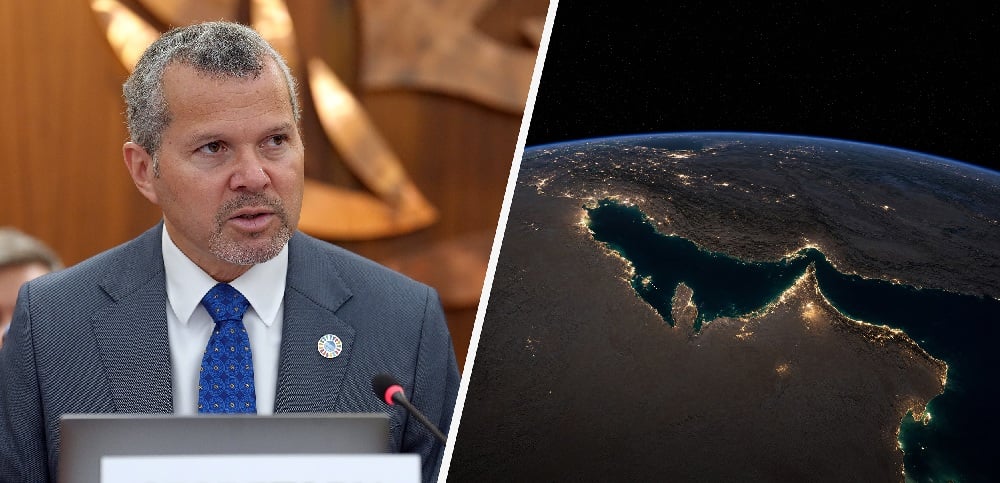
The Secretary General of the International Maritime Organization, Arsenio Dominguez, condemned the attacks on shipping. He issued the following statement.
“These reckless attacks have again placed innocent seafarers in grave danger. No seafarer should have to risk their life simply for doing their job. As long as the safety and security of crews cannot be assured, I urge flag States, shipowners, operators and all relevant authorities to avoid exposing seafarers to unnecessary danger by transiting the Strait.
“The situation in the region remains volatile. These attacks further intensify the fear, uncertainty and psychological strain already being endured by the nearly 6,000 seafarers who remain stranded on-board vessels unable to depart the Persian Gulf safely.
“I call on all States concerned to exercise maximum restraint, de-escalate the situation without delay, and facilitate the safe departure of the ships still trapped in the Gulf since the crisis began.
“The safety of seafarers must remain our foremost priority,” the Secretary General declared.
International Energy Agency, International Monetary Fund, World Bank, World Trade Organization
The heads of the IEA, the IMF, the World Bank, and the WTO issued a statement on the conflict, noting that the global economy has been broadly resilient to the shock from the war, although some economies had experienced a slowdown in growth and an uptick in inflation.
“Overall, the impact has been highly uneven, affecting energy supplies, food security, various commodities, and economic activity across many countries and regions and creating deeper concerns about growth and price stability… Fuel and fertilizer prices dropped since we last met in June. However, uncertainty remains high, and the impacts of the war could linger. Energy markets and transit of goods are still facing strains. Governments and the international community should remain vigilant and continue to work together to uphold the principle of freedom of navigation in the Strait and globally, support economic recovery, protect jobs and livelihoods, strengthen energy and food security, including through improving port infrastructure and trade facilitation, and increase broader resilience to future shocks,” the agency heads said.