The World Shipping Council has released a new report summarising deficiencies found in government cargo inspection programmes, reviving a vital data series that the International Maritime Organization (IMO) discontinued last year.
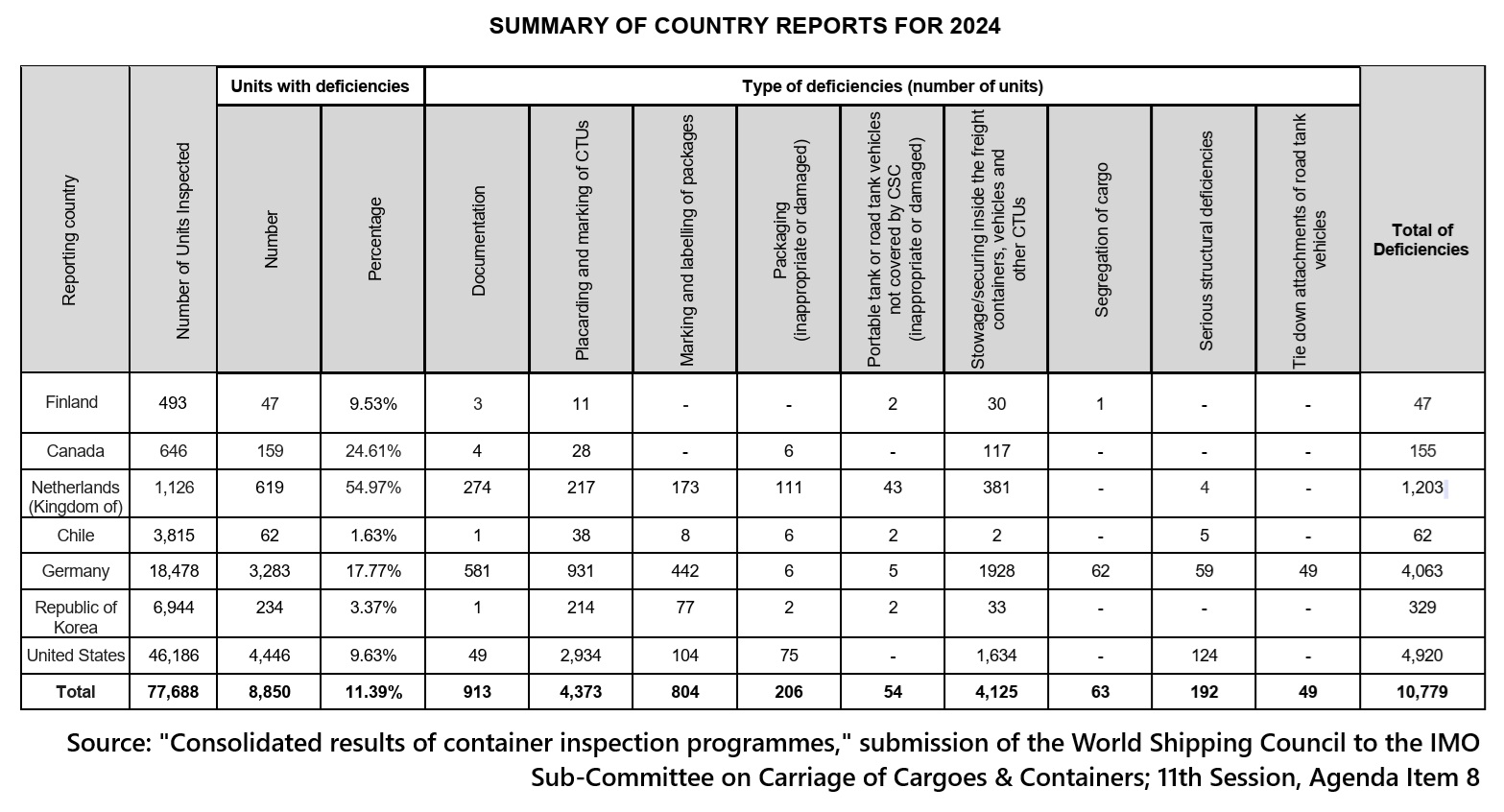
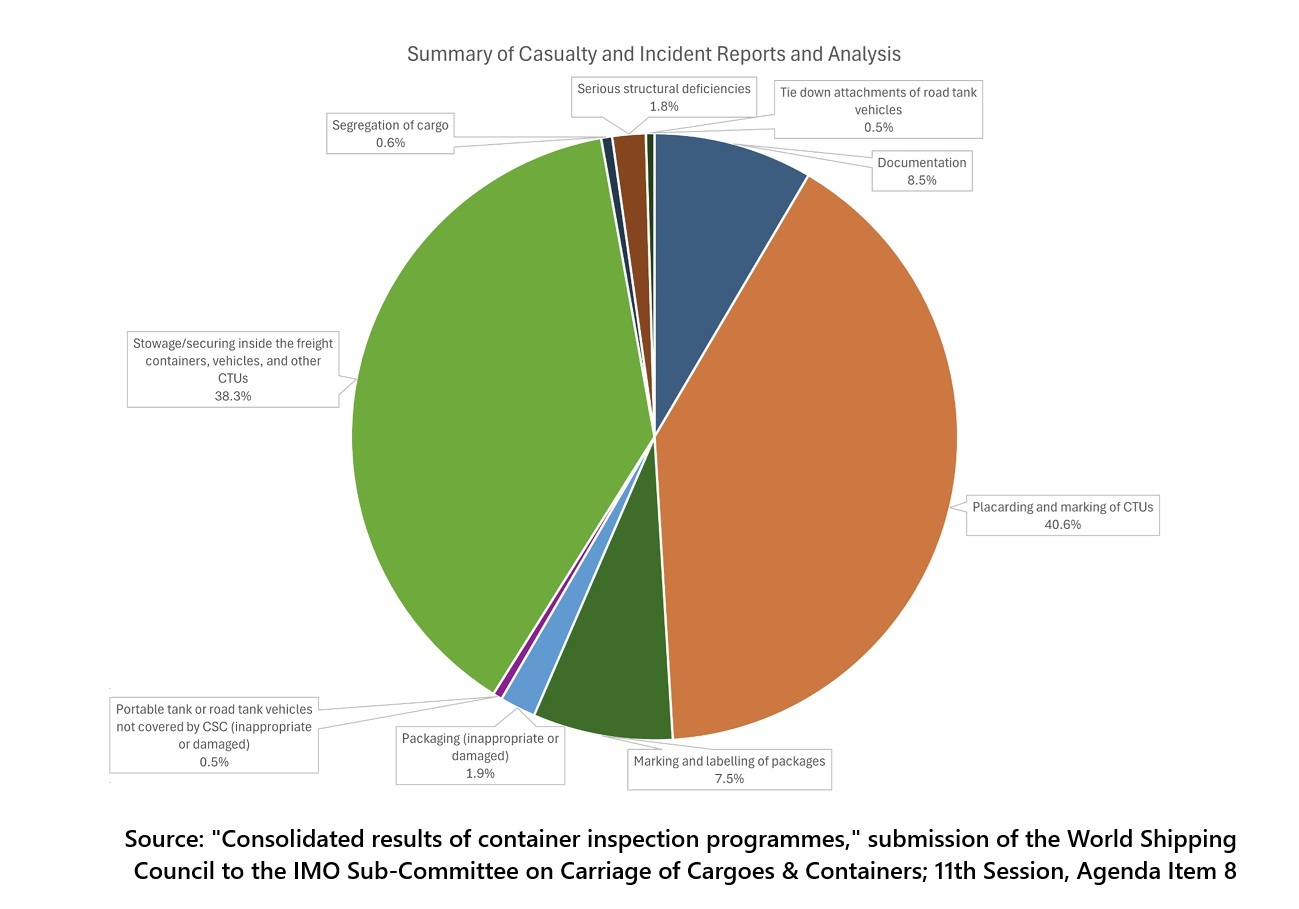
The 2024 report shows that 11.39% of inspected cargo shipments were found to have deficiencies, up slightly from the IMO’s final 2023 figure of 11%. These include mis-declared and undeclared dangerous goods, incorrect documentation, and improper packing – all of which can lead to serious safety incidents, including ship fires.
Drawing on port state inspection data, WSC’s report continues a data series dating back to 2011. Under international law, port States may inspect containers to ensure cargo complies with international regulations and standards, including proper declaration and packing of dangerous goods.
“Cargo safety starts with correct declaration and safe packing of goods,” said Joe Kramek, President & CEO of the World Shipping Council.
“With over one in ten shipments showing deficiencies, the message is clear: gaps in cargo safety remain far too common. Cargo deficiencies put crews, ships, cargo, and the environment at risk.”
“By continuing this reporting, we can identify trends and take appropriate action to improve the safety of shipping. With only seven port States currently reporting, there is an opportunity for more governments to contribute their data, strengthening the global picture and helping to make shipping safer for everyone.”
This reporting builds on WSC’s wider cargo safety work, from co-developing the CTU Code Quick Guide and Checklist to help pack containers safely, to supporting efforts that reduce container losses at sea and working with the IMO on stronger dangerous goods rules.
The World Shipping Council is also developing an industry cargo safety program, which will be launched shortly, to improve cargo screening and inspections.
“Data like this shows why the Cargo Safety Program is needed,” Kramek added. “By pairing accurate reporting with better screening, clear standards, and practical guidance, we can reduce risks and protect lives, cargo, and the marine environment.”
Previous years’ data summary (IMO GISIS):
2017 – 8.64%
2018 – 8.40%
2019 – 6.54%
2020 – 7.41%
2021 – 10.86%
2022 – 7.84%
2023 – 11.00%
2024 – 11.39%
(Click the table or pie chart below to access a larger, more clear, versions).