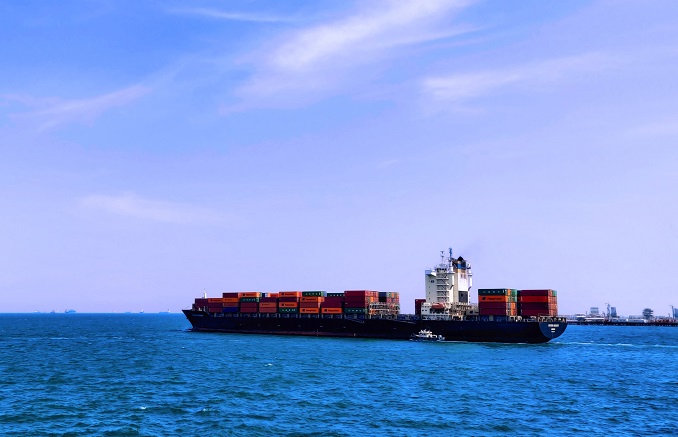
Notice has been given to Fremantle Ports that Vessel Traffic Services Officers and Small Craft Personnel will carry out a 48-hour strike from 05:30am on Sunday 25 August. The local harbour master has also issued instructions that effectively close Fremantle port because of bad weather. The port is likely to re-open in time for the notified strike to go ahead.
Bad weather blues
Earlier this week The Bureau of Meterology reported that a fast-moving high pressure system was moving east across the southwest corner of the state, and forecast that there could be winds up to 30 knots an hour, seas up to three metres and swells up to five metres for the latter half of the week. The Bureau has since issued strong wind warnings for today (Friday) in the Perth waters area, and gale force warnings for Saturday.
We also understand from a Fremantle Ports spokesperson, that, for at least some part of yesterday (Thursday) afternoon, the container cranes were not working. Container ships cannot (as at the time of writing (early Friday)) enter the port; however that may change. Thee potential to carry out operations is assessed against the prevailing and forecast weather on an ongoing basis within pre-defined parameters. There is the potential for windows in the weather to occur, whereby ships can be moved on and off berths. The weather is also forecast to abate. Fremantle Ports Harbour cameras (accessed as at 10:30am AEST / 08:15am AWST) show the Inner Harbour is empty of container ships and that the cranes all have their crane-arms in the elevated position (i.e. they’re not working). MarineTraffic indicates that the only vessels in the Inner Harbour are the likes of tugs, supply vessels, heritage vessels, and the like. The cameras showing the Truck Marshalling Areas are showing few trucks.
[Update / note: Shipping Australia re-checked these cameras at 2:41 AEST (12:41 AWST i.e. Perth time) on Saturday 24 August 2024). The Inner Harbour did not have any ships and the truck marshalling yard did not have any trucks].
Bulk carriers and tankers that were listed as being due for movements in the port can be tracked via AIS and their IMO number in close to real-time; MarineTraffic is showing that these vessels are not in, or near, Kwinana – they are either nearby or are some distance away and are sailing away at some knots.
Shipping Australia understands that preparations for adverse whether began on Wednesday, and that vessels at anchor in the outer anchorages have since been advised to go to sea, vessels alongside the outer harbour terminals will be required to evacuate. According to the Fremantle Port Guide, the outer anchorages include a sea area to the north west of Fremantle, the Gage Road Anchorage areas just outside Fremantle Port, the Owen Anchorage, and the Cockburn Sound (which is the sea area south of the mouth of the Swan River in Fremantle to Rockingham, bounded on the east by the mainland and the west by Carnac and Garden Islands).
So it appears that throughput of containers, iron ore, coal, cement clinker, gypsum (used in construction), liquefied natural gas imports, petroleum imports, and fertiliser imports, will be affected.
Incidentally, for the purposes of clarity, Shipping Australia understands that it is quite normal for ports to be subject to adverse weather from time-to-time, which disrupts operations. We are not criticising anyone for this, and, particularly, we are not criticising the Fremantle Ports Authority.
The weather being what the weather is, it is unclear if or by how much, the weather will abate to allow operations and, then, on Sunday, the strike is due to occur.
Unplanned, multi-day, closure
Western Australia is therefore potentially facing an unplanned, multi-day closure of its main general cargo import and export port.
These developments are most unwelcome given that Vessel Traffic Services Officers and Small Craft Personnel have recently concluded a 48 hour strike. We understand that the port has said that the impacts were mitigated through planning in collaboration with its stakeholders and that landside operations continued. Cargo discharge and loading was said to be “relatively unaffected”. Nonetheless, there are series of ongoing cascading problems when ports are shut on an unplanned basis.
We note that one commenter argued that our previous article on the fact that the port at Fremantle was subject to a strike was a little exaggerated on the basis that there had been an earlier planned four day closure of one of the container terminals for maintenance. While everyone has the right to their opinion, we stand by our earlier comments that the situation was serious. There is a fundamental difference between a planned closure of one container terminal with appropriately long notice given to industry and the closure of a whole port with very short notice (albeit legally-compliant with the Fair Work Act) that will affect all container cargo of every kind.
We further assert that no-one should believe that the current and ongoing situation is anything other than very serious.
If the industrial transforms into a series of rolling strikes then the situation will become that even more serious with wide-ranging impacts on shipping, local supply chains, and supply chains across the country.
Fremantle is vitally important to Western Australia, its people, and to the nation
In 2023, Fremantle Port Authority handled over 800,000 twenty-foot equivalent containers, over 31 million tonnes of cargo and trade valued at A$46 billion. That’s roughly equivalent to 85,753 tonnes valued at A$126 million a day; it’s also equivalent to approximately 3,500 tonnes an hour valued at A$5.25 million an hour. Even a short disruption to operations is very serious from an economic perspective.
About 48% of the import TEU are full of goods as are 30% of the export TEU; the others are empties. The top containerised cargo types at Fremantle are metal manufactures; iron and steel products; machinery; furniture and parts thereof; paper / paperboard / pulp / waste paper; plastic items; household appliances; rubber manufactures; chemicals; animal feed; oats; fruit and vegetables; fresh meat; cereals all kinds.
Fremantle also handles dry and liquid bulk cargo, although this is in considerably smaller volumes than the large dry bulk ports such as Newcastle. Nonetheless, these are still substantial volumes with a substantial A$ value. The volume (mass tonnes) of dry and liquid cargo handled accounts for about 70% of the volume at the port. Liquid bulk in 2022-2023 volumes stood at 7,413,561 (23.7% of total) while dry bulk stood at 14,575,488 (46.6% of total).
Fremantle is also the major WA terminal for the import of vehicular and wheeled machinery (e.g. motor vehicles, agricultural and industrial machinery, other transport equipment etc); there were 113,967 vehicles imported in 2022-23 – roughly equivalent to about 312 vehicles a day.
The port directly and indirectly supports 6,000 jobs, according to Fremantle Ports.
It should therefore now be obvious that Fremantle is economically very important and that a series of rolling strikes and other forms of industrial action would be severely detrimental and costly to the Western Australian economy. That’s especially as supply chains are under stress from global geopolitical events.
Losses to society
Economic analysis (dated 2020) estimated that, at the Port of Fremantle, each day of industrial action would cause direct disruption to A$59.1m worth of containerised goods and would cause a direct loss to society of A$3m a day. There is a “multiplier” effect – as cargo is not delivered then certain activities that should have occurred, and taxes that should be collected, don’t happen. If vessels don’t enter or leave, then tugs are not used, nor line boats, nor container terminal operations. Cargo is not delivered, trucking, warehousing, distribution, casual labour gangs and so on, don’t work and aren’t paid. Goods don’t arrive in the right place, at the right time, and time-sensitive events such as conferences, shows, and exhibitions don’t go ahead. The effects are many and legion.
The multiplier effect for the effect on wider society can also be estimated from research. The mean average from several economic reports is that the multiplier societal / economic loss is about 2.3 times the direct loss indicated above. If we then multiply the direct loss as estimated by economists by the multiplier of 2.3x, i.e., using the formula A$3m x 2.3 we can estimate a daily loss to the Western Australian economy of a day of shut-down of at least A$6m a day.
This new figure also does not take into account the fact that longer periods of industrial action, i.e., those that take place over more than one day, are likely to cause compounding effects. It’s also an underestimate because (a) the value of money tends to decline over time and the economic analysis report was written about four years ago and (b) it only looked at disruption to containerised throughput and did not take into account dry and liquid bulk throughput.
Consequences – supply and configuration of shipping services
Ships servicing Australia often do so from South East Asia, typically trans-shipping cargo via Singapore, Port Klang or Tanjong Pelepas (both in Malaysia), and maybe Laem Chabang (Thailand). An Australian east to west service loop could be something like – Singapore – Brisbane, Sydney, Melbourne, Adelaide, and Fremantle. A west to east loop could start at Singapore and end at Brisbane. In reality, there are many different loops of many different kinds, some calling at New Zealand, some along the Australian east coast and so on.
As is well-known, there is a severe security situation in the Red Sea caused by terrorists in Yemen attacking merchant shipping. Container ships on the Asia-Europe trade have particularly changed route and are avoiding the Red Sea by sailing around the southern tip of Africa (often referred to as sailing around the Cape (as in “The Cape of Good Hope”)). This adds a considerable time and distance to the route. Incidentally, there is severe disruption both underway in Canada, and there is a very high likelihood of severe disruption occurring in the United States and also in India. These are all industrial relations matters.
A container vessel sailing from, say, Singapore to Rotterdam via the Suez Canal at 25 knots will sail 8,316 nautical miles in about 14 days. The same vessel sailing around Africa at the same speed will sail 11,783 nautical miles in about 20 days. Such a change increases sailing time by about six days and massively increases the total costs that ships will need to pay. More fuel will be consumed and, as many vessels are operated on a hire-basis, that means there is a daily hire-rate to pay too. More days at sea equals a higher daily charter cost. On an industry-wide basis, all of these costs are then multiplied by the fact that there are multiple vessels sailing these routes. Shipping Australia doesn’t have visibility on how many ships are sailing a given route at a given time (although this can be estimated) but, to give an idea of scale, consider that there are about 6,255 specialised container ships in service in the world today, according to industry analyst Alphaliner.
The Red Sea security situation and the increase in sailing distances has led to massive congestion at trans-shipment centres around the world, such as Singapore, as ships are not meeting their scheduled connections as smoothly as they did prior to the Red Sea Crisis. Cargo has built up owing to the vessel-bunching phenomenon and trans-shipment ports have become choked. Cargo movements are being delayed and the longer distances and trans-shipment port congestion has cut global capacity for the carriage of containerised goods. There are many follow-on problems and the most important in this context is that ocean shipping companies are reconfiguring their networks so as to omit congested ports because of the massive delays in many places around the world.
We have also been advised that, before the earlier 48-hour strike, there were are already delays of up to 36 hours for off-window vessels at Fremantle and so the 48 hour strike made that bad situation much worse; a one-day strike on top of a several-day shut-down because of bad weather is even worse.
Once the port re-opens after the bad weather and the strike then vessels will converge on Fremantle and there will be instant congestion. Bear in mind that, depending on the exact situation, container ships can cost anywhere between US$50 a minute to US$250 a minute to operate. Shipping companies simply cannot afford to have vessels waiting around for days and, as the Fremantle / South East Asia route is quite short in ocean shipping terms, ships cannot make up lost time on that route. If the rolling strikes continue to, well, roll, do not be surprised in the future if container shipping lines are forced to blank and / or omit sailings to / from Fremantle. Vessels already in the area might not call at Fremantle and might drop cargo off in other ports, such as Adelaide or elsewhere.
All of which means that the importers and exporters working out of Fremantle are already faced with delays, higher costs, reduced services and, possibly in the not-too-distant future, extra delays, costs, and less services.
Consequences – landside cargo handling issues
If there are extreme delays at Fremantle, then container ships might not call at Fremantle and Fremantle-bound cargo might be directed elsewhere. Typically, cargo that is re-directed to some other port could be trans-shipped by the same shipping company back to the envisaged port of discharge on the next available vessel, but, with the supply situation so tight currently and high costs (including opportunity costs), then consignees might have to bear the cost of moving cargo by land across country to get it to where it needs to be in Western Australia.
Before anyone even starts thinking about the costs of local trucking, remember that thousands of boxes can be moved halfway around the planet by one ship for a cost of a few hundreds of dollars or a few thousands of dollars. A shipper will be spending at least than and probably more to ship a couple of boxes across country.
Remember too that the trucking market has its own dynamics. If trucks suddenly start being booked in large volumes to move cargo long distances across country, and if this situation continues for an appreciable length of time, then the cost of truck carriage is most likely to undergo rapid price inflation until a point is reached until the trucking market is sold out and there are no more trucks that can be booked at any price.
Industrial disruption on the waterfront causes severe landside issues. Goods get “stuck”, which can erode the economic value of the goods (owing to ongoing costs of storage, repeated handling, unforeseen transport costs, etc), perishables can spoil (and then the consignee, or the port, or some other third party now has hundreds to thousands of tonnes of dangerous material to deal with e.g. consider butter and milk – when they spoil, they go rancid, and become (potentially) a breeding ground for dangerous pathogens). It is entirely possible that cargo could be abandoned.
Meanwhile, cargo movements create a many economic activities – trucks are booked, warehouse space is booked, distribution centre space is booked, labour gangs are booked at multiple stages along the chain. If the cargo does not then arrive then usually there are a whole series of no-show fees and cancellation fees that need to be paid and there are other wasted costs. Consider, for example, staff who have been booked for a retailer’s receival depot to unload goods from a container. If they are not sufficiently informed in advance, and if they show up for work, they will still have to be paid at least some labour hours even if there is no work to be done.
That’s a situation that would be repeated across companies, across multiple industries, across multiple sectors.
Meanwhile, commercial relationships can be severely harmed, medicines can be held up, time-sensitive events (shows, conferences, events and the like) cannot go ahead, intermediate industrial input goods (goods used to make other goods) can fall into short supply which could cause production problems, empty containers build up in trucking yards which imposes a wide range of financial costs along with dangerous health and safety issues for yard workers… In short there is a cascading effect across a wide variety of industries, in a wide range of sectors, and in relation to a wide range of issues.
A sensible tweak to industrial relations laws
Incidentally, as a quick aside, a lot of these issues affecting innocent third parties – i.e. Australian importers and exporters, and ocean shipping companies, could be either avoided or at least mitigated if the required notice period for industrial action was lengthened from the current three days to 21 days. Three days of notice is way too short (ships loaded with goods are already on their way; both import and export cargo is already in the system and it’s too hard to get it back). More notice would give time for shippers and carriers to re-think and re-plan their shipments without incurring undue cost. It wouldn’t greatly adversely impair the effect of the industrial action – the company targeted for industrial action would still experience reputational issues, adverse publicity, operational disruption and a loss of revenue – but third parties that are not parties to the strikes wouldn’t unduly suffer.
Shipping Australia recommends that notice periods should be revised upwards and calls upon policy-makers to make this change.
Consequences – empty containers
Containers are vital for the movement of general goods. When emptied, those boxes remain important for the supply chain as a certain amount will be needed to maintain inventory, some will need to be repaired, and, most importantly, the vast majority of boxes need to be returned back to cargo-origin countries for refilling.
If empty containers are not sent to where they are needed (i.e. to the places were cargo needs to be shipped) then empty boxes start falling into short(er) supply and that puts upwards pressure on freight rates and it cuts capacity.
Meanwhile, a really dangerous set of problems begins to develop on the ground. Boxes are made of solid steel and that’s a material that’s not known for its tendency to evaporate. If empty boxes are not sent overseas they start accumulating here in Australia. They start building-up in yards and depots. Too many boxes start being stacked (potentially) too high, which means they can be blown off the top of the stack by the wind, or the stack could be blown over.
Forty foot shipping containers have a weight in excess of 3,000 kg and you do not want that being blown off the top of a stack to land anywhere near people, vehicles, buildings, or any other assets. It’s a really serious safety issue. Empty boxes in yards and depots repeatedly have to be shuffled about so that full boxes can be handled. That unnecessarily costs money and its all a dead loss to the company and to society generally. Eventually, the system gets to the point where everything gets so clogged neither full nor empty boxes can safely be moved and trucking companies, yards, depots and the like all start suspending operations.
A build-up of empty containers in the logistics system is a like a built up of fat in your arteries. Eventually, you’re going to go into cardiac arrest.
So why not just call for shipping companies to call at the nearby local port and just evacuate all the empties? Oh, that’s right, strikes.
Consequences – availability of goods for purchase and use
As noted above, Fremantle is the major general cargo import terminal for much of Western Australia; container ships and container shipping carries a vast amount of varied essential goods including but not limited to food, medicine, clothing, everyday goods bought in shops of all kinds, cleaning products of all kinds which is particularly important as they are used for environmental cleaning e.g. old age residential homes, hospitals, medical practices etc which will likely contain high numbers of people who are particularly vulnerable to harm from infection.
One, 48-hour strike, is unlikely to cause goods to fall into short supply especially if the vessels in the port are already being worked and there are large volumes of good stockpiled by supermarkets, retailers, warehouses etc. However, if the industrial relations dispute is allowed to continue for any appreciable length of time, and if blanking is forced to happen, then without goods coming into Western Australia everyday essentials (and everything else) could start falling into short supply, especially as it is only ocean shipping that can handle the huge volumes required.
How much stock does everyone have locally? 50%? If so, that would be a huge stock level. If there are rolling strikes of either one or two days every week, that’s a cut in port and shipping capacity of 14% to 29% and that’s before we even start thinking about the effects of blanking and / or port omissions.
How long would that 50% inventory last? It’s too hard to say as there are too many factors, but it’s going to evaporate real quick.
What needs to happen now
Shipping Australia calls upon all the parties to the Fremantle industrial dispute to come to an amicable settlement so that everyone can go back to work.
The people of Western Australia are depending upon you.
If not, well, buckle-up. If this industrial dispute does not resolve soon, it’s going to be a real rough ride.