
A safety alert on structural failures and improving stowage of cargo transport units in Australian ports has been issued by the Australian Maritime Safety Authority.
The aim is to raise awareness of packing, structural and stowage requirements of shipping containers and other cargo transport units in Australian ports.
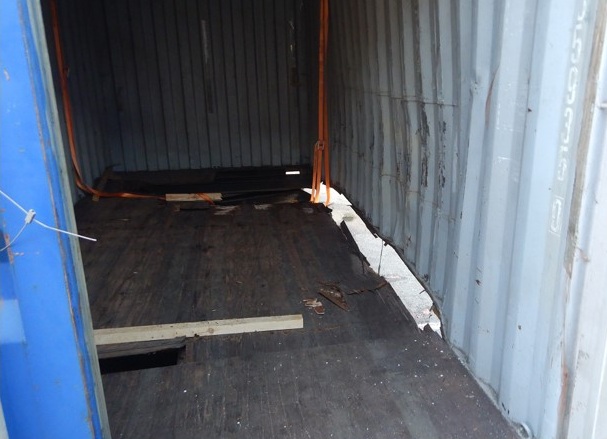
AMSA advises that there has been a rise in the identification of improperly stowed cargo transport units and structural issues during inspections. Two recent incidents involving improperly packed cargo transport units resulted in catastrophic structural failures. Such events pose significant risks to ships, crew, port operations, and global supply chains, AMSA says.
“We urge all stakeholders involved in cargo handling—including packers, shippers, container owners, and shipowners—to review safety protocols and ensure compliance with international cargo handling standards to mitigate these risks,” AMSA wrote in a bulletin.
In one incident, there was a visibly collapsed container floor and, in the other, there was visible structural damage to a container carrying 12 millimetre rebar coils.
“These incidents highlight the critical need for ship and container owners, shippers and packers to understand their regulatory obligations and put effective controls in place. Ships entering Australian ports must meet these requirements for packaging and securing of cargoes within cargo units and [cargo transport units],” AMSA wrote.
Anyone who packs, sends, or stows cargo who does not reasonably ensure that the cargo does not damage the vessel, risks the safety of a person, or damages the environment, commits an offence under section 114 of the Navigation Act. Shippers must provide cargo that is safe and suitable to transport; cargo carried inside some other object (such as a container or other cargo transport unit) should be packed and secured within that unit. Safe cargo stowage is also a requirement under the Code of Safe Practice for Cargo Stowage and Securing.
Safe and secure stowage that prevents damage or hazards to the ship and persons onboard is also a requirement under Marine Order 42, which implements SOLAS Chapter V regulation 5.2. Further guidance can be obtained from the IMO / ILO / UNECE Code of Practice for Packing of Cargo Transport Units. Further guidance can also be obtained from the IMO’s “Informative material related to the IMO/ILO/UNECE Code of Practice for Packing of Cargo Transport Units” (see MSC.1/Circ.1498).
Containers
Shippers and packers must ensure that containers are not defective when packing and sending cargo to be loaded onboard a ship. Marine Order 44, which implements the Safe Container Convention. Section 21 of Marine Order 44 prohibits the loading or unloading of a container that is either defective, not fitted with a safety approval plate, not marked with a current periodic examination scheme date, not marked with an Approved Continuous Examination Program or administration, or which exceeds the maximum operating gross mass.
AMSA advises that shippers and packers must check that containers / cargo transport units meet minimum safety standards, are free from damage prior to packing and ensure cargo is packed and secured safely. They should also discontinue use and advise the owner to undertake repairs where cargo transport units are found to be damaged. They should also refuse to accept a cargo transport unit where there is reason to suspect that tis has not been packed safely.
Container owners must keep containers in good condition through regular inspections, timely repairs and proper documentation. “Any container found to be damaged or unsafe must be withdrawn from service until appropriately repaired,” AMSA writes.


