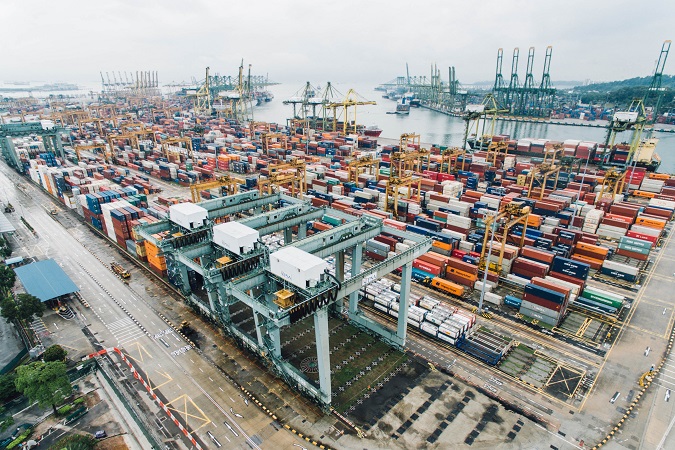
“50% of congestion has been resolved”, analyst Sea Intelligence has declared to the industry in its most recent early October update.
The proportion of the global boxship fleet unavailable due to port delay has dropped to 7.9% from a peak of 13.8%, the analyst reported.
Although half of 13.8% is 6.9%, the analyst pointed out that there is a baseline unavailability of about 2% (as there are always some delays), and at the height of port congestion, about 11.8% of global capacity was been up by port delays.
As that additional congestion has fallen to 5.9%, “this essentially means that the congestion issues have been cut in half, compared to the situation in January 2022”.
Plotting a path to future normality, Sea Intelligence noted that the rate of change as the situation worsened, and the rate of change as the situation has eased, are similar. An alternative method is to look at the rate of improvement now when compared to the rate of improvement in earlier periods of port congestion.
With either methodology, the result is the same: normality is forecast to return in March 2023.
A third (complicated) methodology involves creating an absorption-of-capacity-index normalised to the peak of congestion periods – with one being the recent peak and the other being the 2015 congestion peak. This forecast suggest a return to normality in January 2023.
“In summary, all three models suggest we should be back at the “normal” 2% capacity loss baseline by early 2023, assuming the current pace continues, and there any no new major supply chain disruptions”, said Alan Murphy, CEO of Sea Intelligence.
However, it would appear that the wish for “no new major supply chain disruptions” may, alas, be forlorn. Global forwarder DHL is reporting that, while port congestion is easing across Asia and North America, and volumes have started to shrink after last year’s cargo boom, “new disruptions to the supply chain are already underway”.
China’s zero-COVID policy continues to give rise to supply chain concerns with major manufacturing centres disrupted. Although port operations are exempt from restrictions, “manufacturing and inland logistics have already been affected to varying degrees,” DHL reports.
Although the port queue around Southern California has cleared, a new 40 ship-strong queue has formed at the Port of Savannah in the State of Georgia (about 160km north of the Florida border on the Atlantic coast of the south-eastern US). A 15-strong port queue has been reported near New York.
Over on the other side of The Pond, there is waterfront strike action in the UK at the Ports of Liverpool and Felixstowe, along with concerns of further port strikes. Port congestion at Hamburg and Bremenhaven is expected to ease as industrial action has been called off following an employer-workforce deal.