“You cannot predict the future, but you can create it,” management guru Peter Drucker said.
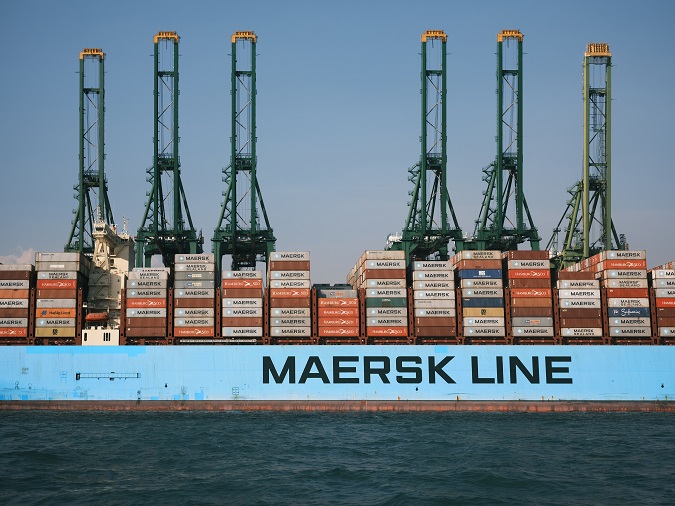
Management at major container shipping line Maersk have evidently taken that message to heart. They are working to create a methanol-powered future.
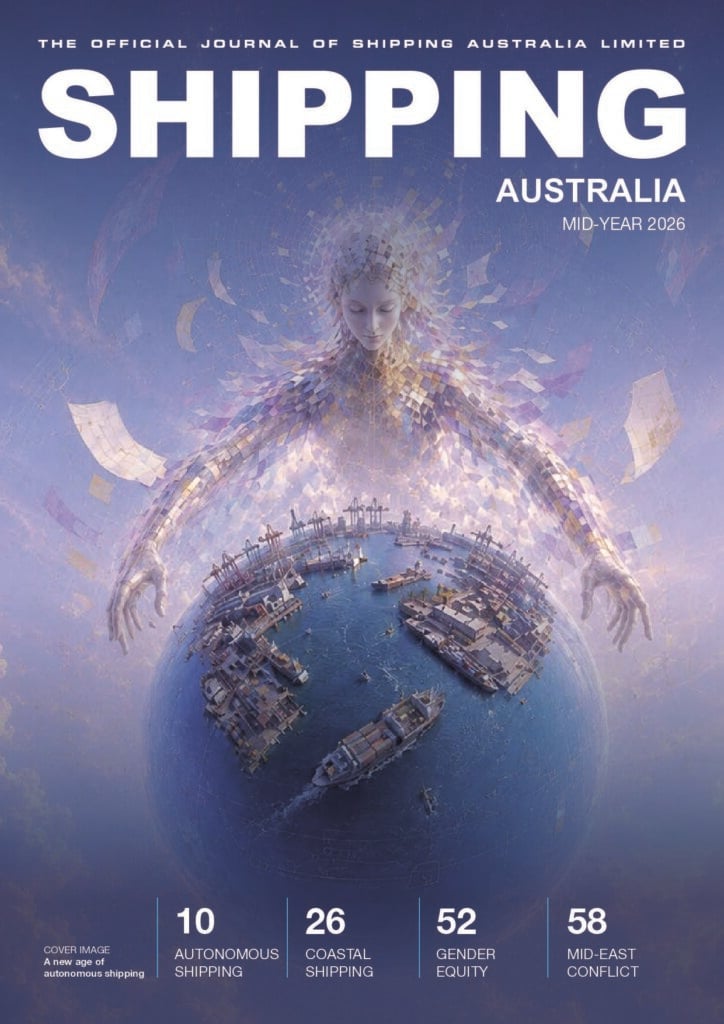
Methanol is a potentially potent fuel for the maritime industry. As it happens, Shipping Australia recently wrote a review of the technology, which we published in our recent Winter Edition of our Shipping Australia magazine.
You can read our Methanol article here.
Methanol is a simple, clear, colourless alcohol that can be used as a fuel. Methanol is already produced industrially in large volumes. It has one carbon atom and four hydrogen atoms. So, yes, it is a hydrocarbon fuel but, unlike fossil fuels, it can be manufactured using existing sources of carbon (i.e. burning it potentially does not increase the volume of carbon dioxide in the atmosphere).
It can also potentially be produced with renewable energy. That potentially means that there could be a massive reduction in overall carbon emissions from ships that use the fuel.
Maersk’s green methanol
Just after mid-August, Maersk announced that it had identified partners to produce green fuel for its first vessel to operate on carbon neutral methanol: REintegrate, a subsidiary of the Danish renewable energy company European Energy.
REintegrate and European Energy will establish a new Danish facility to produce the approximately 10,000 tonnes of carbon neutral methanol for Maersk’s first vessel with the ability to burn methanol.
Back in February 2021, the Danish company announced it would build a 2,100 TEU dual fuel methanol powered vessel, later announcing in June that it would be built at the Hyundai Mipo Dockyards. The vessel will the world’s first methanol-powered feeder and it will be 172 metres long with a mid-2023 entry into service date. It will sail on the Baltic shipping route between Northern Europe and the Bay of Bothnia.
Maersk will work with REintegrate and European Energy on the development of the green methanol facility.
“This type of partnership could become a blueprint for how to scale green fuel production through collaboration with partners across the industry ecosystem, and it will provide us with valuable experiences as we are progressing on our journey to decarbonise our customers’ supply chains. Sourcing the fuels of the future is a significant challenge, and we need to be able to scale production in time. This agreement with European Energy/REintegrate brings us on track to deliver on our ambition to have the world’s first container vessel operated on carbon neutral methanol on the water by 2023,” said Henriette Hallberg Thygesen, CEO of Fleet & Strategic Brands, A.P. Moller-Maersk.
With fuel production expected to start in 2023, the methanol facility will use renewable energy and biogenic CO2 to produce methanol. The energy needed for the power-to-methanol production will be provided by a solar farm in Kassø, Southern Denmark.
Maersk’s mega- methanol order
The company then wowed the international markets by announcing a plan to buy eight methanol-powered boxships, each with a capacity of 16,000 TEU, with a delivery date for sometime in the first quarter of 2024 from Hyundai Heavy Industries. There is also an option to buy four more vessels in 2025.
They will feature a methanol propulsion configuration developed in collaboration with makers including MAN ES, Hyundai (Himsen) and Alfa Laval. The vessels will be classed by the American Bureau of Shipping and sail under the Danish flag.
The new methanol-powered ships will replace older ships, generating carbon dioxide emissions savings of around one million tonnes. The new vessels are part of Maersk’s ongoing fleet renewal program and will replace tonnage of more than 150,000 TEU which is reaching end-of-life and which is leaving the Maersk managed fleet between 2020 and Q1 2024.
“As an industry first, the vessels will offer Maersk customers truly carbon neutral transportation at scale on the high seas”, the company said in a statement.
The ships will be dual-fuel enabled, allowing the vessels to burn methanol or low sulphur fuel; additional CAPEX to support the dual fuel operation is in the range of 10% to 15% of the original price.
Soren Skou, CEO, A.P. Moller – Maersk. “The time to act is now, if we are to solve shipping’s climate challenge. This order proves that carbon neutral solutions are available today across container vessel segments and that Maersk stands committed to the growing number of our customers who look to decarbonise their supply chains. Further, this is a firm signal to fuel producers that sizable market demand for the green fuels of the future is emerging at speed”.
Commentary: Dr Martin Stopford
Renowned shipping economist, Dr Martin Stopford, author of the industry standard textbook “Maritime Economics,” wrote an opinion piece for Splash 24/7.
Dr Stopford noted that the big order will help stimulate methanol production but cautioned that there is competition for limited supply and that the conversion process is inefficient (anywhere between 40% to 70% of the energy is lost).
From a risk perspective, Dr Stopford notes that methanol burns easily in combustion engines and, as the ships are dual fuel, if the methanol project doesn’t work out then Maersk can switch the ships to very low sulphur fuel.
“Overall, Maersk should be congratulated for showing the world that shipping is serious about the environment, at a time when there’s not much green maritime technology on offer… the real revolution is not the fuel – there is still a long way to go on that front. It is their aim to negotiate a zero carbon freight premium which shares the cost of the $2,000 a tonne green fuel with shippers. The liner companies need the shippers as financial partners on the voyage to zero carbon in 2050 and this would get the show started”.
You can read our Methanol article here.
[fl_builder_insert_layout id=”15046″]