
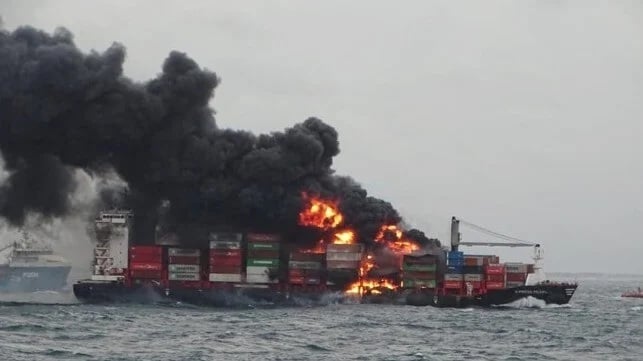
Mis-declared cargo is still a major contributor to container ship fires, that’s one finding from the Allianz Safety and Shipping Review 2026.
Recent years have seen ship fires are their highest level in over a decade and mis-declared cargo has been a leading cause, the Allianz report says, noting that it has been a contributing factor in a quarter of all carg0-related Incidents. Failure to properly declare, document, and pack hazardous cargo can result in containers being stowed inappropriately or hamper firefighting efforts.
And, it should be somewhat obvious, but fires pose a deadly threat to seafarers along with the risk of lifelong horrific burn injuries and mental trauma to those who come into contact with fire and survive. Fires from mis-declared and poorly packed cargo can also lead to severe environmental destruction, as in the case of the X-Press Pearl disaster. In that case a mis-declared and badly packed cargo of nitric acid leaked, contacted materials (probably rubber) that led to a runaway exothermic reaction and then to a ship fire. The ship later sank off the coast of Sri Lanka and discharged around 1,600 tonnes of plastic pellets into the sea. It was one of Sri Lanka’s worst environmental disasters.
Shipping Australia CEO, Capt Melwyn Noronha, commented:
“While international regulations already exist, they are only as effective as their enforcement. Mis-declared cargo poses a serious and potentially catastrophic risk, and the onus must also be firmly placed on shore-based shippers to declare goods accurately and responsibly. Regulators and governments must act decisively and immediately to ensure compliance, strengthen oversight, and hold those responsible to account before this growing threat results in further irreversible damage. The contents of a container, and its weight (VGM), are vital to the stability and safety of a ship.”