Shipping Australia is delighted to learn that the Spanish energy giant, Iberdrola, will invest EUR1.1 billion (about AUD$1.7bn) in developing a new green hydrogen and methanol plant in Tasmania.
300,000 tonnes of methanol
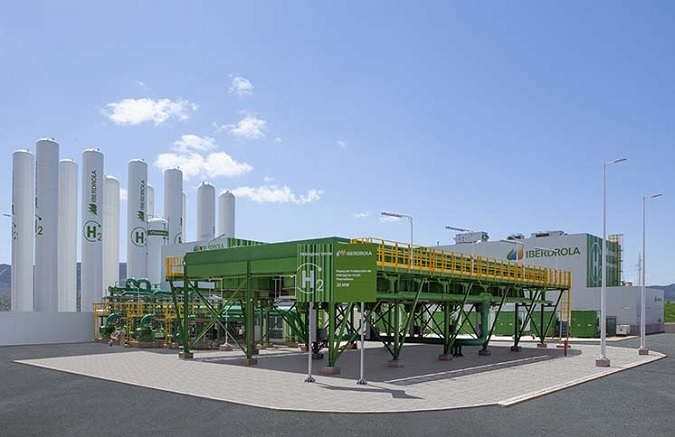
The new facility, one of the largest in the world, will produce up to 300,000 tonnes of methanol for use as a marine fuel. Iberdrola is partnering with ABEL Energy and the Australian government to set up “Bell Bay Powerfuels,” at Bell Bay in the northern part of Tasmania.
Noting that the global shipping industry is opting to build green methanol-fuelled ships, the project proponents said that the new facility will initially produce 200,000 tonnes of green methanol, rising to 300,000 tonnes later.
Shipping Australia CEO, Captain Melwyn Noronha, commented: “the size of Iberdrola’s green methanol investment in Tasmania is most welcome. The green shipping revolution is well and truly on its way to Australia. It is also further evidence, along with all the announcements from ocean shipping companies and the new environmentally-friendly shipping regulations from the IMO, that the global ocean shipping industry is barrelling head-first and at-speed toward a brighter, cleaner, and greener, future”.
World markets: methanol and marine fuels
Currently, about 90 methanol plants around the world produce approximately 110 million tonnes of methanol, which is a widely traded and consumed commodity used to create a wide range of industrial and consumer products.
The current size of the world market for cargo ship-fuel is about 229 million tonnes and it has a value of USD$130 billion a year. However, as methanol has less than half the energy content of heavy fuel oil and as the price of methanol is much greater than heavy fuel oil (about USD$2,556 / tonne for methanol vs USD$602 / tonne for heavy fuel oil (Singapore) at the time of writing), the future world volume and value of the global ocean-going cargo ship-fuel market will likely increase.
About 6,013 unique cargo ships made a total of approximately 34,000 port calls in Australia in 2018-2019, of which 5,915 unique cargo ships made 17,602 voyages to Australia from oveseas ports.
Ocean shipping industry investment
In August 2021, global ocean shipping giant, Maersk, stunned the maritime world when it announced it had placed a groundbreaking order for eight large vessels, capable of carrying up to 16,000 twenty foot containers, that would be powered by methanol. Maersk has since made several more big orders for large methanol-powered ships. It then followed up with a series of announcements that it had entered into production and supply deals with a range of methanol producers around the world.
The global ocean shipping industry has since followed with many companies from many different ocean shipping sectors announcing that they have committed to methanol-powered ships.
Green methanol – a clean fuel
Methanol is a type of alcohol and a compound chemical consisting of carbon, hydrogen, and oxygen. Green methanol is a clean fuel – combustion produces 95% to 98% less sulphur oxide emissions than heavy fuel oil, anywhere between 25% to 80% less nitrogen oxides, and potentially up 80% less carbon dioxide emissions.
Production of green methanol is clean as it can be made by splitting water (to obtain hydrogen) using electricity from renewable sources such as solar or wind. Carbon dioxide can be obtained from biological sources, such as from the decomposition of agricultural and other biological wastes.
The resulting emissions of carbon dioxide from combusion in a ship’s engine merely returns the carbon dioxide from where it originated and so the fuel is carbon-neutral i.e. it does not add any extra carbon to the atmosphere.
An exciting future?
A problem with carbon capture and storage on land is that carbon dioxide is quite dispersed throughout the atmosphere. It’s not concentrated enough to capture it efficiently.
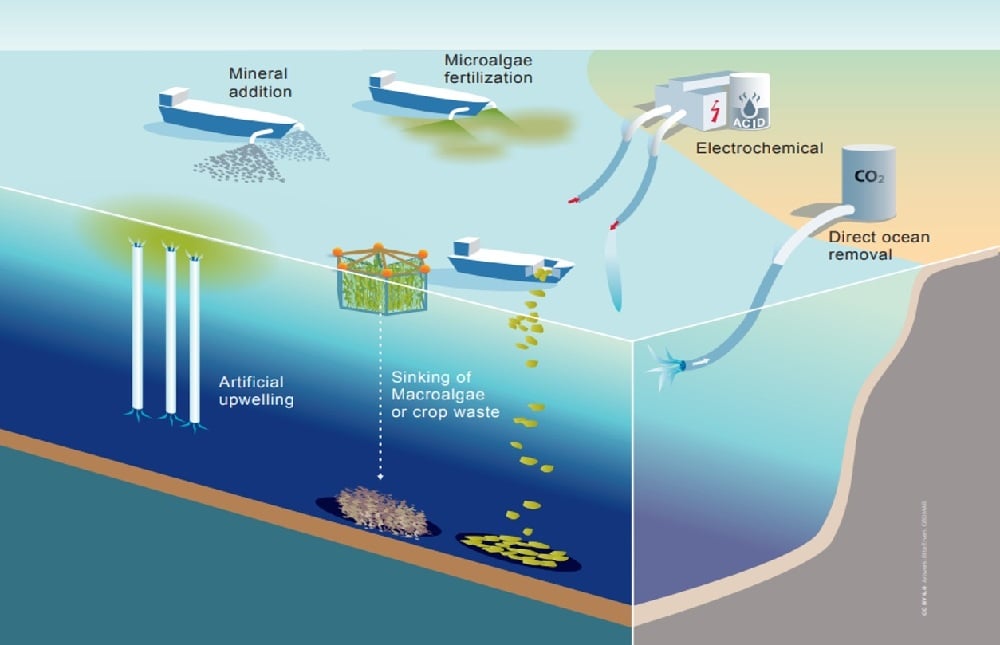
However, There are numerous shipboard trials underway that are testing carbon capture and storage on ships as carbon dioxide from fuel combustion is concentrated in a ship’s exhaust. If onboard carbon capture and storage can be done at an economic cost, then it might mean that bio-fuelled ships would not be carbon-neutral – they would be carbon negative. One carbon-negative project is the “DecarbonICE” project, which would freeze the CO2 into blocks and dump it into the sea. As frozen CO2 is heavier than seawater, it would sink to the sea-bed, penetrate sediments and be permanently stored. This process somewhat mimics a natural process that results in gases forming into ice on the sea-bed. Carbon capture and storage technology aboard ships is due to be discussed in July 2023 by the International Maritime Organization, the specialist maritime-focused agency of the United Nations.
Further reading